
PSC @ Supercomputing 2026
November 15-20
Chicago, IL
Booth 4054

PSC will be capping off our 40th year at SC26, in Chicago! Find us at Booth 4054 to learn more about our new machine room, and get the scoop on our cutting-edge compute platforms coming down the pike: Bridges-3 and TangleLab quantum computing.
Kick Back at the PSC Backyard Party
Swing by the PSC Booth 4054 on Wednesday, November 18 from 4-6pm ET! Enjoy a drink, unwind, network—and maybe play some giant Jenga.
Learn and Connect
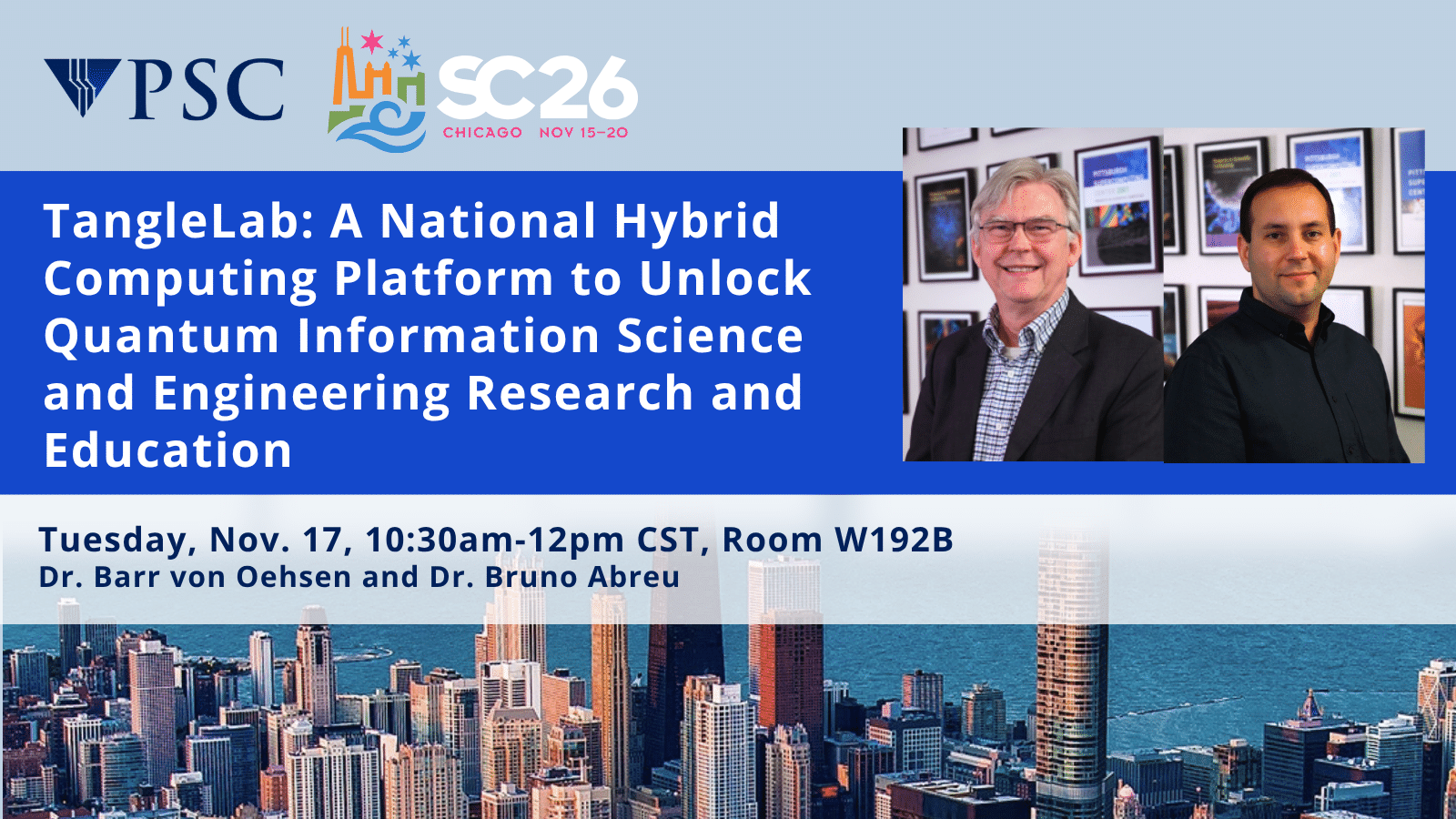
TangleLab: A National Hybrid Computing Platform to Unlock Quantum Information Science and Engineering Research and Education
Location: Room W192B
Exhibitor Forum – Quantum Computing I: Tuesday, Nov. 17, 10:30am-12pm CST
Presented by Dr. Barr von Oehsen and Dr. Bruno Abreu
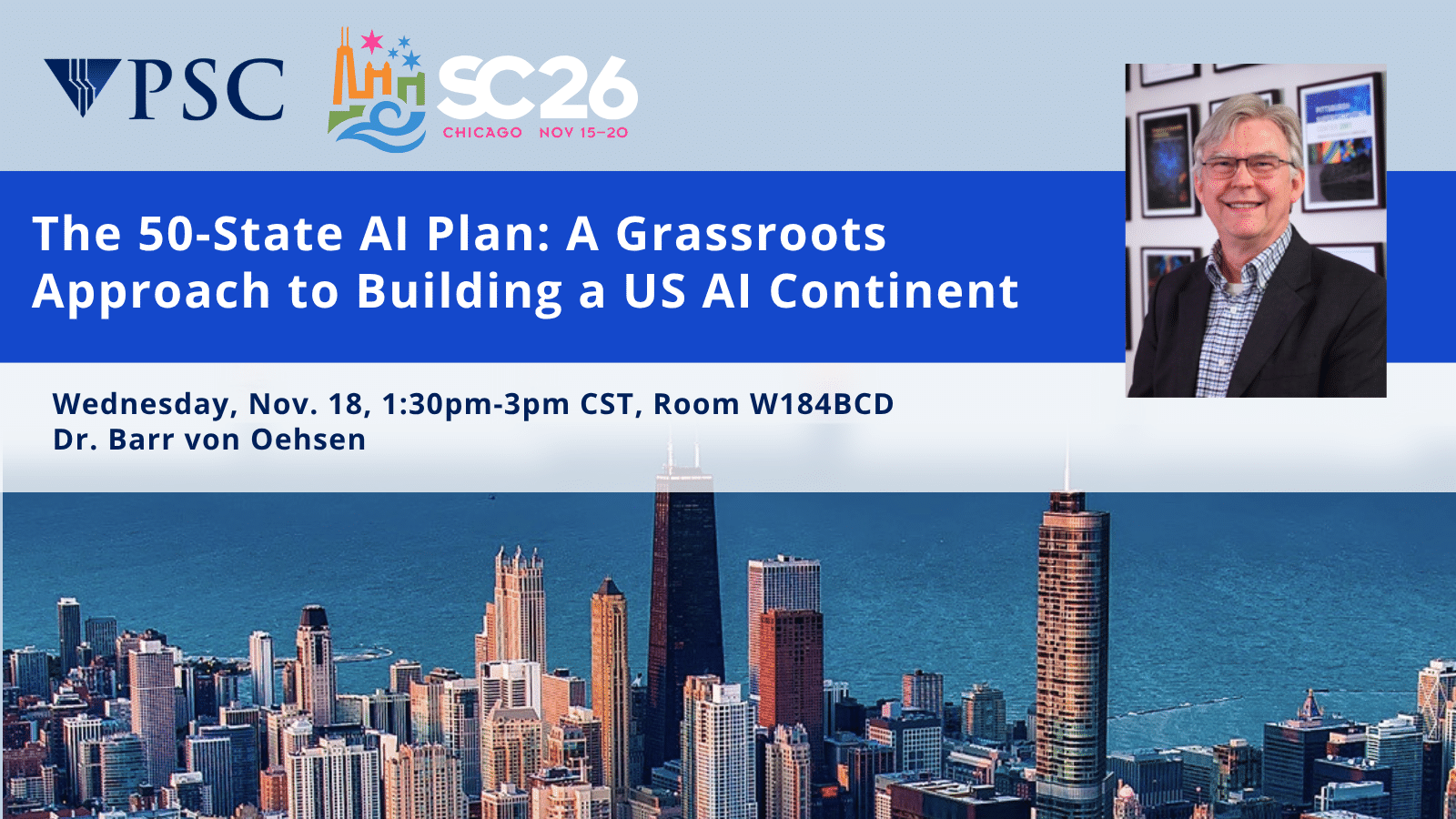
The 50-State AI Plan: A Grassroots Approach to Building a US AI Continent
Location: Room W184BCD
Wednesday, Nov. 18, 1:30pm-3pm CST
Moderated by Dr. Barr von Oehsen
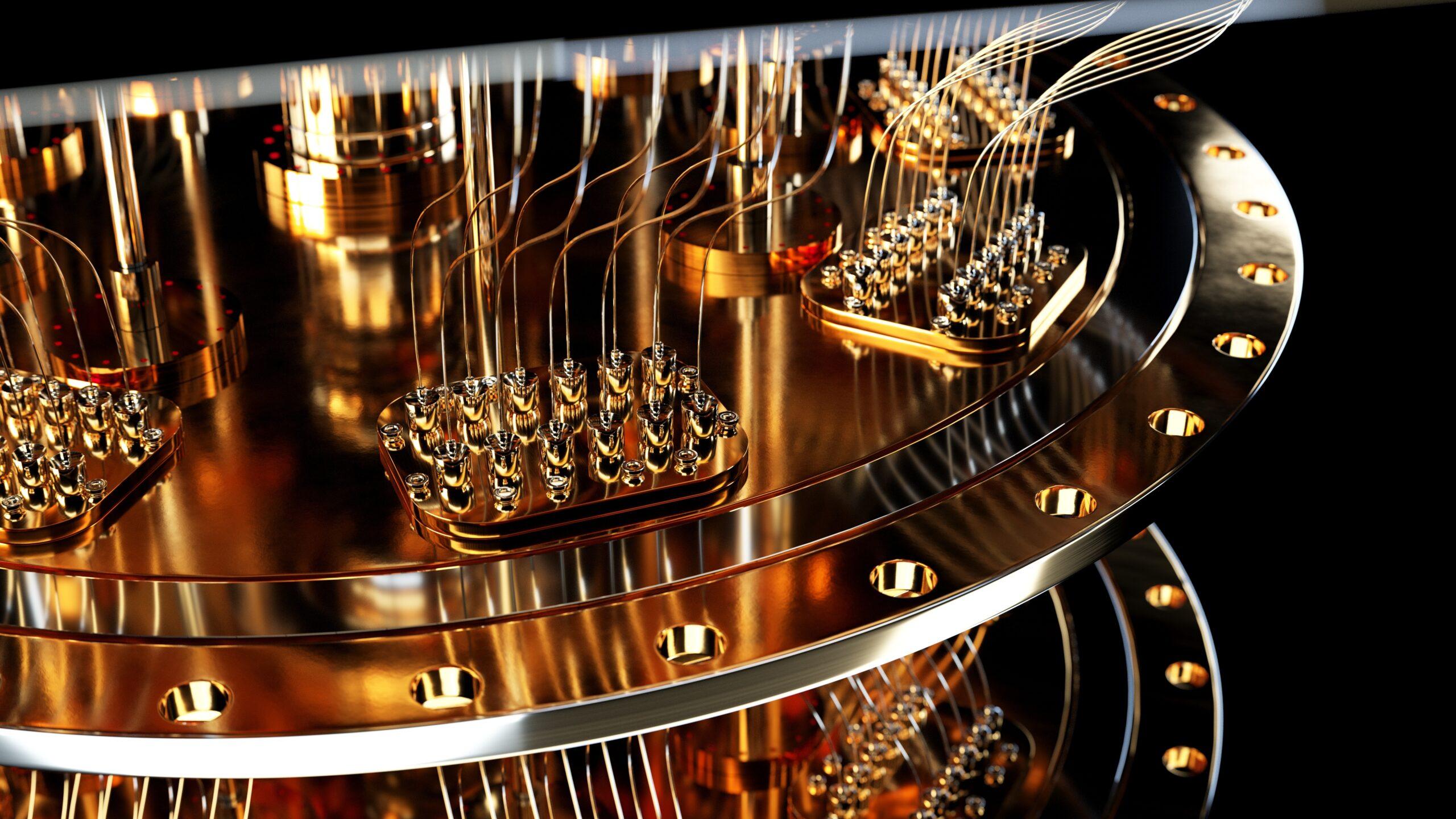
TangleLab: Making Quantum Computing Practical for Open Research
Location: Booth 4054
All Conference
TangleLab is a national hybrid quantum-classical computing platform containing both QPU and HPC elements to unlock quantum information science research and education. Stop by our booth to learn more about this groundbreaking platform, coming to PSC in 2027.
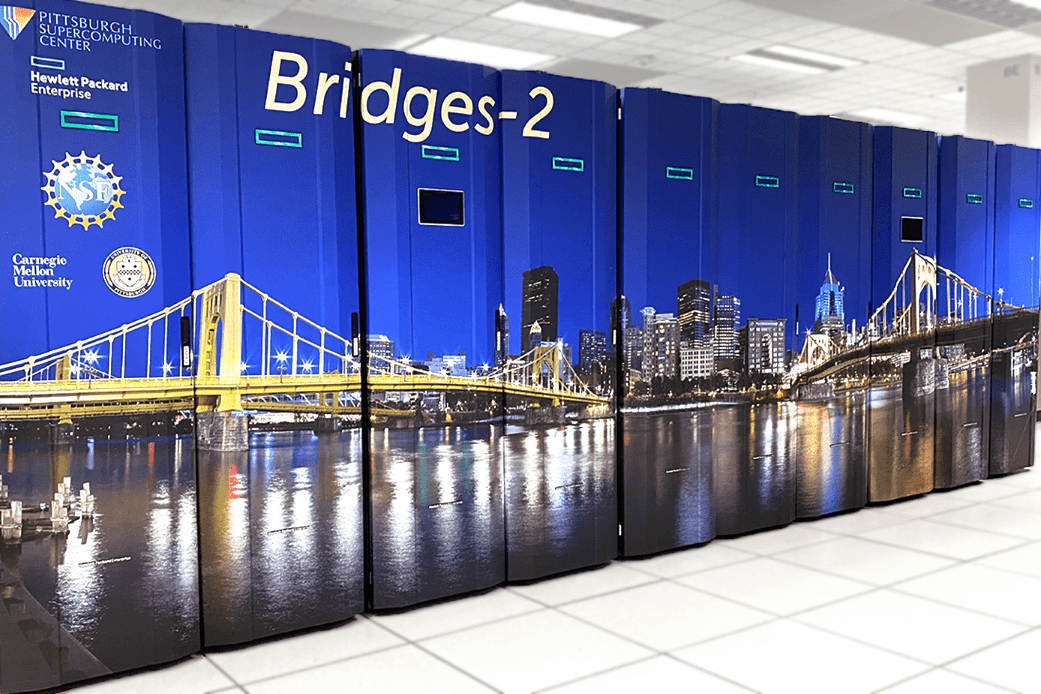
Bridges-3: The Next Generation of PSC’s Flagship Supercomputer
Location: Booth 4054
All Conference
Visit our booth to learn more about the next incarnation of PSC’s flagship supercomputer. Coming in 2027, Bridges-3 will provide utting-edge technologies for scientific research projects and workflows that require seamless integration of HPC, AI, and data.
Come Learn with Us!
Location: Booth 4054
All Conference
PSC’s Learning Lab is a collection of HPC self-paced, online courses. Visit our staff in the PSC booth to learn how to accelerate your HPC knowledge, and tell us about your learning path!
HuBMAP: The Human Biomolecular Atlas Program
Booth 4054
All Conference
HuBMAP is an NIH Common Fund project that is working to create an open, global atlas of the human body at the cellular level to accelerate understanding of the relationships between cell and tissue organization and function and human health. Join us in Booth 2054 to learn more.
PSC: 40 Years of Powering Discovery
The PSC newsroom brings you the very latest news in high-performance computing and scientific research. And in 2026, we’re also sharing special interviews and retrospectives on the history of computing at PSC, and the people who made it a reality.
Virtual Nerve Cell Results Offer Improved Treatments
Bridges-2 Powers “Digital Twin,” Allowing Rapid Simulated Testing of Neurons
Online Map, Data Delivered to Empower Exploration of Human Health
HuBMAP Data Portal, Announced in Paper in Prestigious Nature Communications, Links Over 9,000 Data Sets for Investigations of Human Body in 3D, and Scales from Organs to Cells
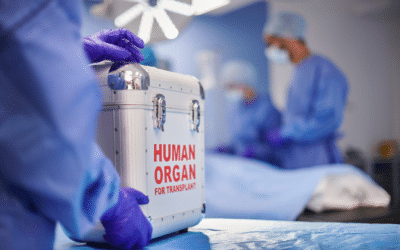
Supercomputer Results Improved Transplant Matches
Massive Memory of PSC’s Blacklight Helped CMU Team Plan Optimal Chain of Recipients, Donors
About PSC
Pittsburgh Supercomputing Center is a joint computational research center with Carnegie Mellon University and the University of Pittsburgh. Our mission is to enable the advancement of science and research. We cultivate collaborative partnerships, empower the next generation of researchers, and provide cutting-edge cyberinfrastructure.