
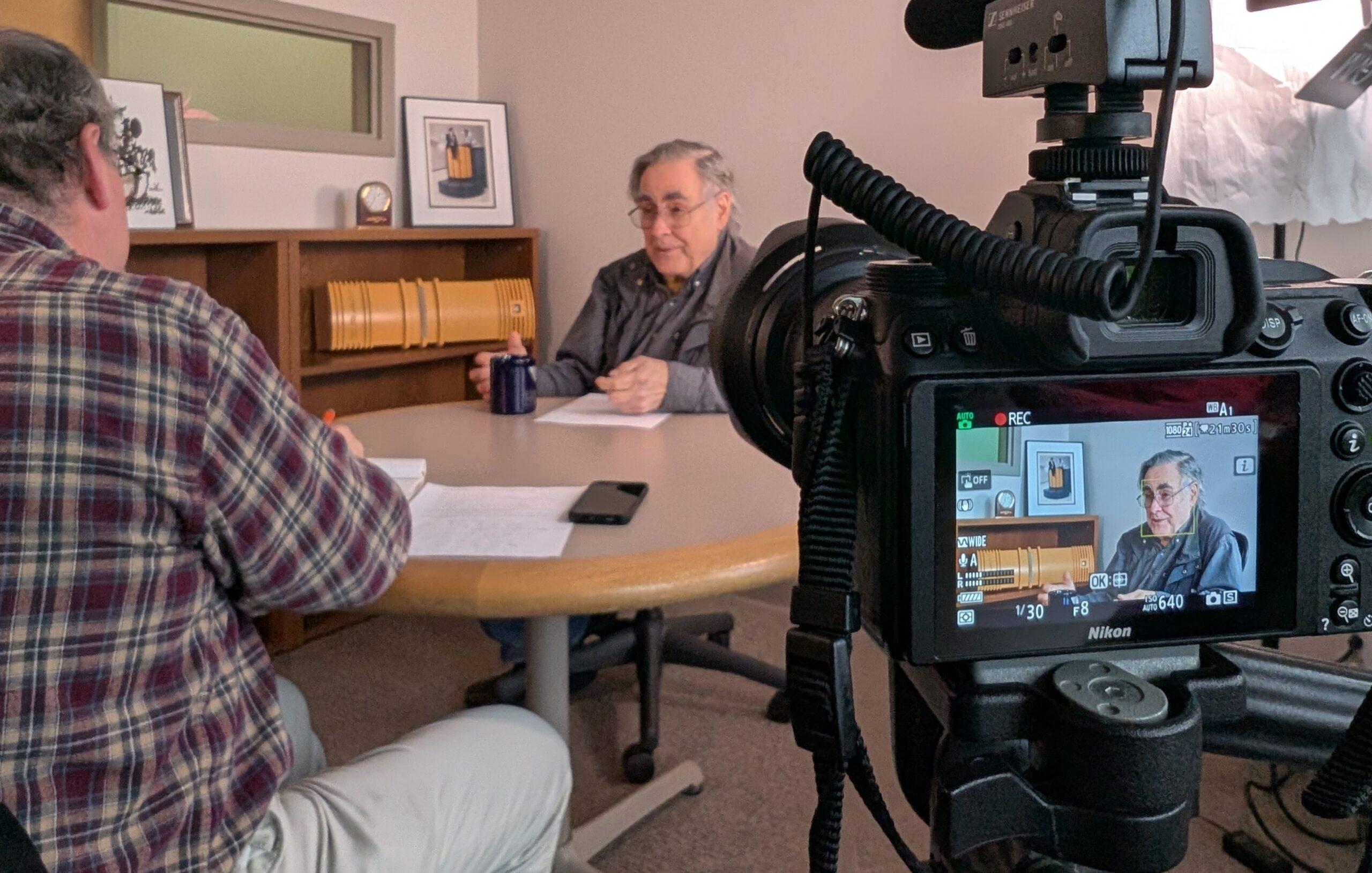
PSC’s Chris Csonka sat down for a conversation about the early days of PSC with physicist, PSC co-founder, and shameless name-dropper, Michael Levine

PSC40: Powering Discovery
2026 marks 40 years of PSC. As we continue on with cutting-edge innovation, we look back on four decades of history in computing, education, and groundbreaking research—and the people who made it happen.
Caltech Physicist
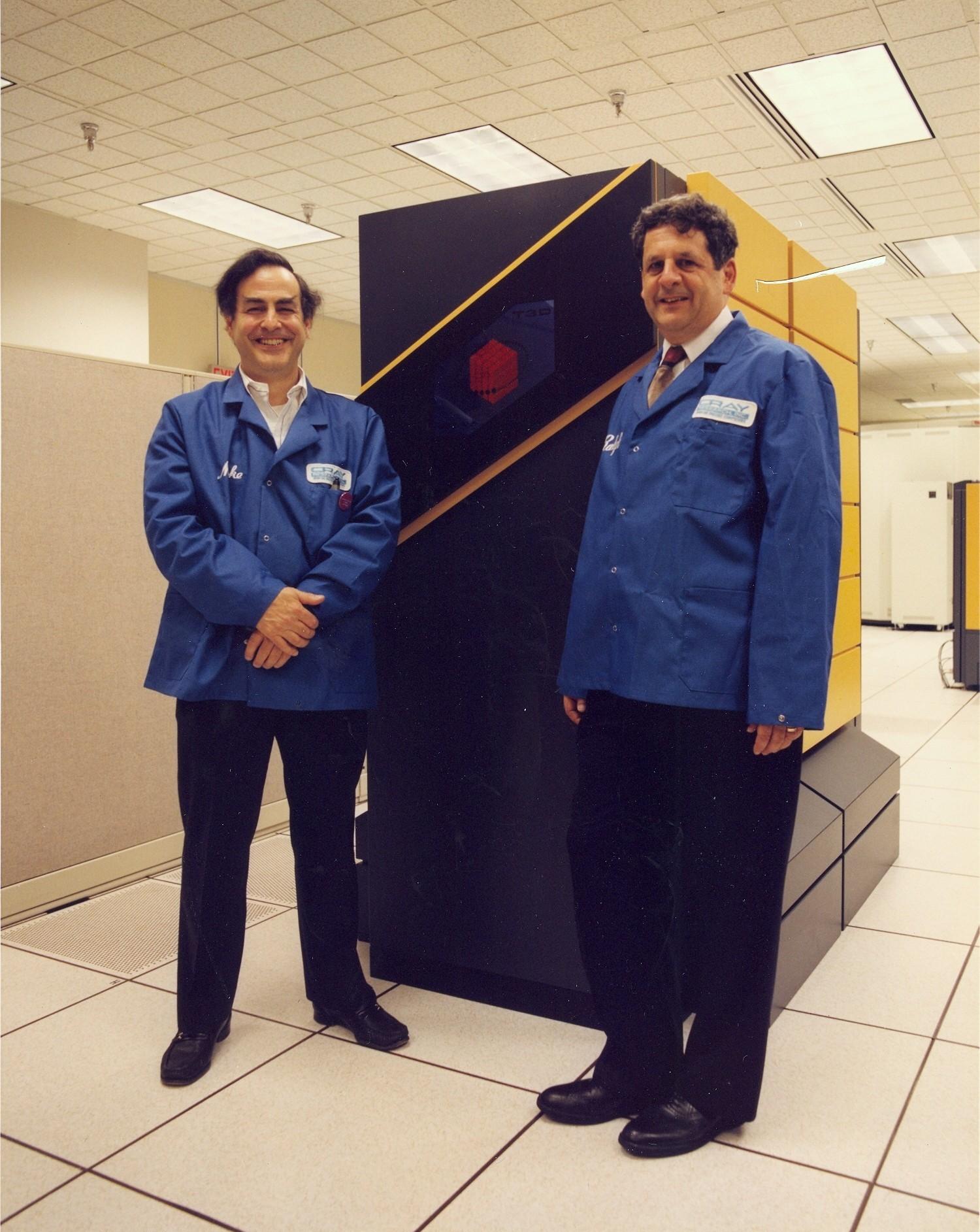
ML: People often ask why two theoretical physicists ended up creating a supercomputing center. The answer is that a lot of seemingly unrelated threads came together: physics research, university computing, the Andrew Project, Pitt-CMU relationships, Westinghouse, and NSF’s solicitation for national supercomputing centers.
You know, I went into physics because I found it interesting. I decided to go to Caltech. As it turned out, it couldn’t have worked out better. Of the four people on my dissertation committee, three of them had Nobel Prizes within a decade.
CC: That’s amazing!
ML: You’ve heard of Richard Feynman? He was one of them. Murray Gell-Mann, he’s not as flashy, but he was another. And then there’s Willy Fowler, who was co-author on a famous paper: Burbage, Burbage, Fowler, and Hoyle or B2FH: a landmark scientific paper on the origin of the chemical elements. The paper’s title is actually, “Synthesis of the Elements in Stars”, but it became known as B2FH from the initials of its authors.
The fourth member was responsible for a major design breakthrough for the atomic bomb. But, as I recall, they wanted Fowler to do a certain calculation but he didn’t know how, so he asked Murray to do it. So Murray calls me. “You, sir. Do you think you could do this calculation?” I said, “Yeah, I could do that.” So I did it, twice. At a colloquium he called me out and thanked me publicly for having done this contribution, which wasn’t necessary, but it just speaks well of him.
Finding the “Right Stuff”
ML: When I got to CMU there was growing recognition that researchers needed better computing resources. Computing was often treated as shared infrastructure, almost like a library, but demand was growing rapidly.
Robert Sekerka, dean of the College of Science held a retreat in the winter time at Seven Springs. Computer science was still part of the College of Science then. Although it wasn’t the main focus, there was debate as to which was the more basic science—physics or computer science? You can guess what side I was on. One of the things he focused on was a need for more computing facilities for research.
Initially the task of finding additional computing resources went to John Pople. I don’t know why they gave Pople that job. He was too smart for that. Besides, he was busy working on his Nobel Prize. After a year of little progress, I inherited the assignment.
About five years before PSC got started, my efforts to get more computing resources for the Physics and Chemistry departments (the FIRST VAX 11/780s!) made me visible to CMU’s administration. Doug Van Houweling, Vice Provost for Computing and Planning was putting together a support group for the Andrew project. The goal of that project was to introduce more computing capability into classes and campus life. Back then, “personal computers” were very new and not very practical. While I didn’t think the Andrew project was a good idea, at the time, I said I would help him.
Getting the Band Together
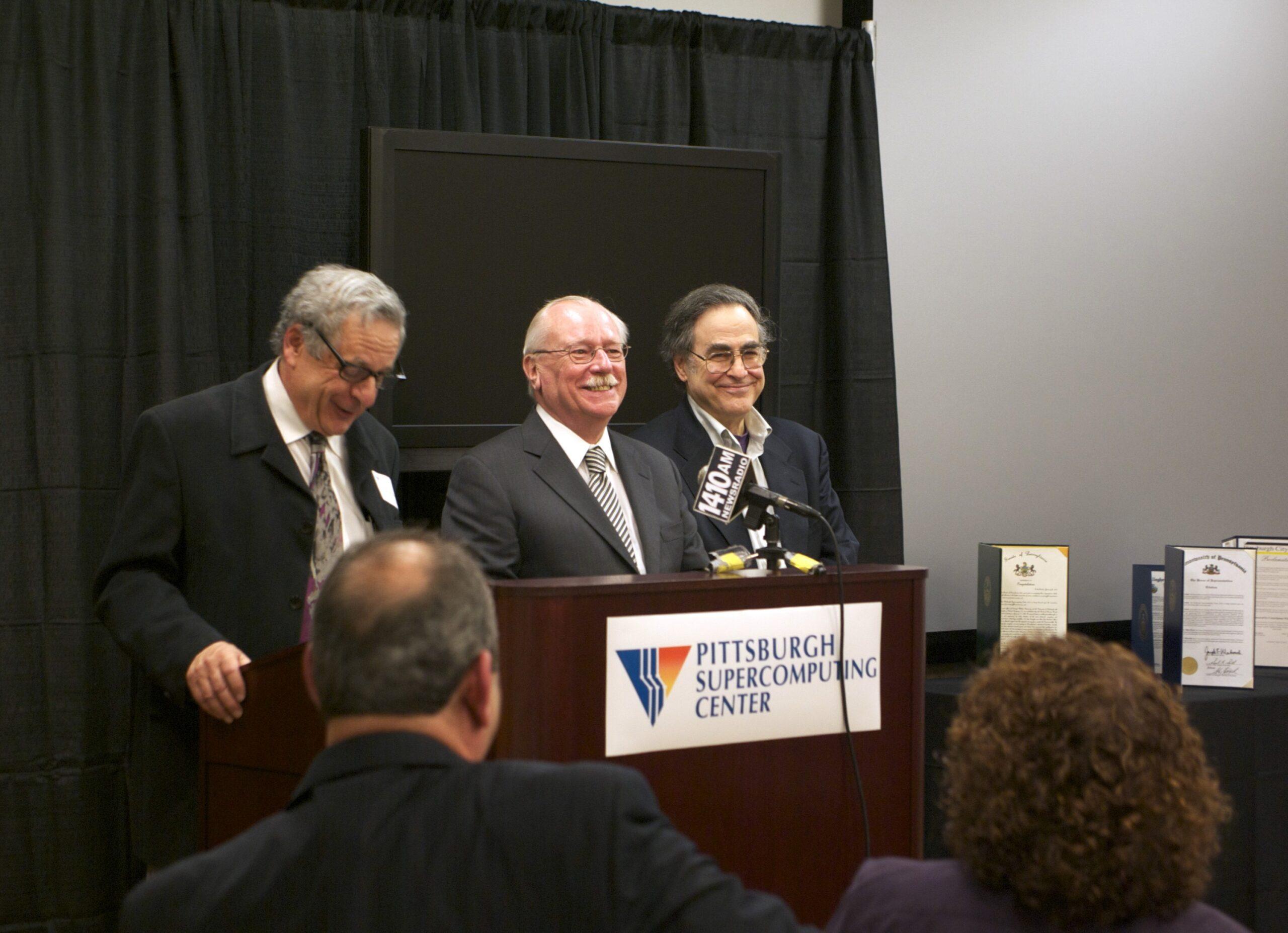
A few years later, I started working with Ralph Roskies at Pitt, a fellow physicist. I asked him about earlier attempts at collaboration between Pitt and CMU. He didn’t know much about them, but he immediately asked if he could work with me. That’s how two of the key people came together.
CC: And Jim Kasdorf?
ML: He came through Westinghouse. They needed computational physicists and were working with Ralph. Jim Kasdorf ran high-performance computing at Westinghouse. Unlike Ralph and me, Jim understood large organizations and knew everyone in the HPC world. We went to meetings where I knew nobody and Jim knew everybody in the room. That experience and networking were critical.
It was Van Houweling, the guy who had spearheaded the Andrew project, who actually brought the NSF solicitation for supercomputing centers to my attention. Ralph suggested I look into it, so I did. Without my experiences sourcing those VAX systems and the Andrew project I would never have figured it out.
So, we’re writing this proposal and storing it in a kind of word processor. The night before we’re going to print it, one of the people that had been helping was supposed to go through and just look for “typos.” When the morning rolls around, low and behold, they had edited it, changing all sorts of things! So, after getting hysterical—which was an appropriate response—we were able to recover what had been written before the “edits” from a back-up copy I had squirrelled away. So whew, what a relief, disaster averted!
ML: Risk was one of the original challenges. Nothing like this had been attempted before, and both universities had to weigh the commitment carefully. Richard Cyert, then president of CMU, cared deeply about raising the university’s reputation and championed the effort. With Pitt’s support, the proposal moved forward through a joint CMU-Pitt organization.
NSF and the Visiting Committee
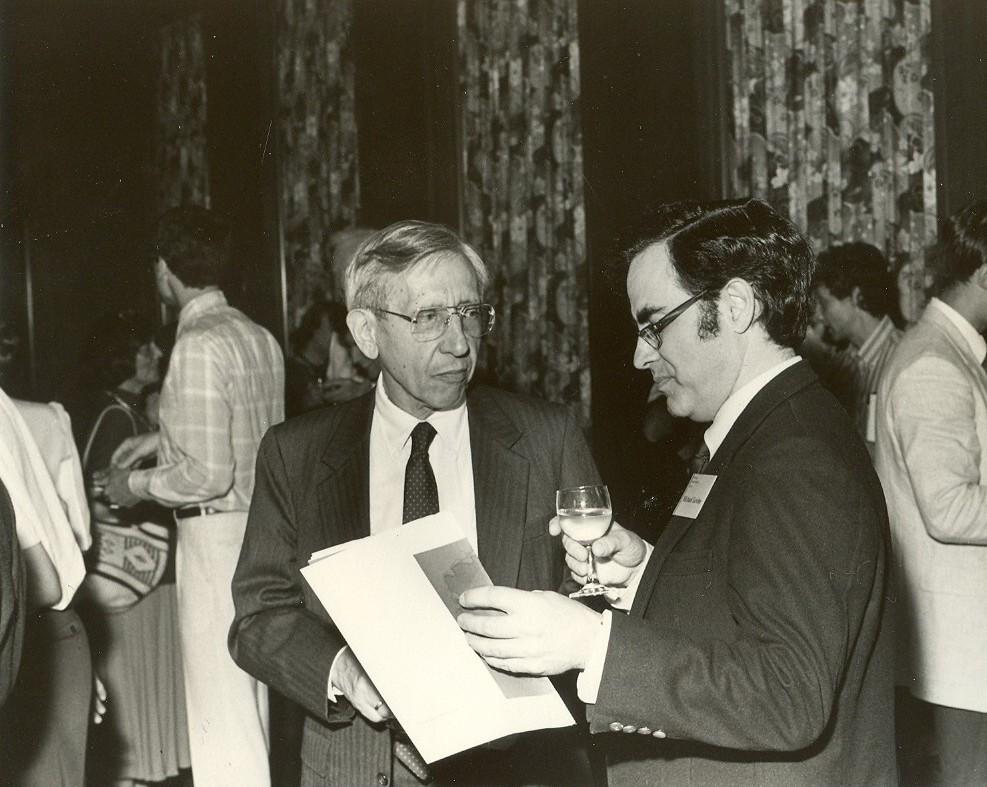
ML: There also wasn’t enough NSF money. Illinois, San Diego, Princeton’s John von Neumann Center, and Cornell received the major awards. There was a smaller amount left over and an “IOU” for a used Cray [supercomputer] someplace in the government. We went to the NSF with Cyert, who wasn’t especially interested in computing, but was very interested in opportunities that could elevate CMU.
At a dinner with the visiting committee, Cyert suddenly became energized. A few minutes later he told me, confidentially, that he had ideas. Then it hit him: for the first time he realized we might actually win this thing!
CC: Really?
ML: At that meeting, Cyert made our pitch to NSF Director Eric Bloch. Bloch initially said no, turned him down. At that point, I thought the meeting was over. Instead, Cyert calmly restated his entire argument, again. Eventually Bloch said, “I don’t have that much money. I only have this much.” Suddenly they were negotiating.
Cyert essentially said, “We’ll take it.” Bloch asked what we’d do if no additional funding appeared. Cyert replied, “We’ll scramble.” That was enough. The deal was done. Now, remember, there was also another part: That used Cray.
CC: And then?
ML: I asked Cyert what we’d do if the money never materialized. His response was immediate: “We’ll sell the machine.” That’s the kind of person he was.
All Together Now
ML: Ultimately, the proposal was well received. But the NSF site-visit committee did notice something about it that we had overlooked: there was almost nothing in the proposal about how the center would actually be run.
ML: Someone asked who would lead it. Before I could react, Angel Jordan pointed across the room at me and said, “He will.” That was the first I’d heard of it.
I actually started to get up to say, ”Oh, what are you saying?” But I had the presence of mind to realize, this is not a good time to do that, because, you know, we actually won.
CC: Seriously?
ML: Yes, we won the award, and suddenly we needed an organization. That’s where Jim Kasdorf became indispensable. He understood how to run complex operations. Soon after Beverly Clayton was hired and she brought tremendous organizational expertise. Between Kasdorf, Beverly, Ralph, and myself, we had the ingredients we needed.
ML: Looking back, I think one of PSC’s strengths was that the leadership came from science. We understood how researchers actually worked and what they needed. We weren’t just operating machines. We were helping scientists solve problems. That’s probably why PSC developed a reputation for service.
CC: People still say that today. They can get computing at other centers, but they keep coming back to PSC because of the support.
ML: I’m glad to hear that. That’s exactly what we hoped to build.
ML: One theme that runs through all of this is that careers aren’t usually planned. They’re more like random walks. One thing leads to another. You meet certain people, encounter unexpected opportunities, and suddenly you’re doing something you never imagined.
PSC happened because an amazing collection of events, people, and circumstances all converged at the right time. Looking back, every one of those threads mattered.
CC: I can definitely see that now.
ML: And somehow those experiences shaped the center. It wasn’t any one person. It was the people, the culture, and the decisions we paid attention to over the years. That’s what made PSC what it became.
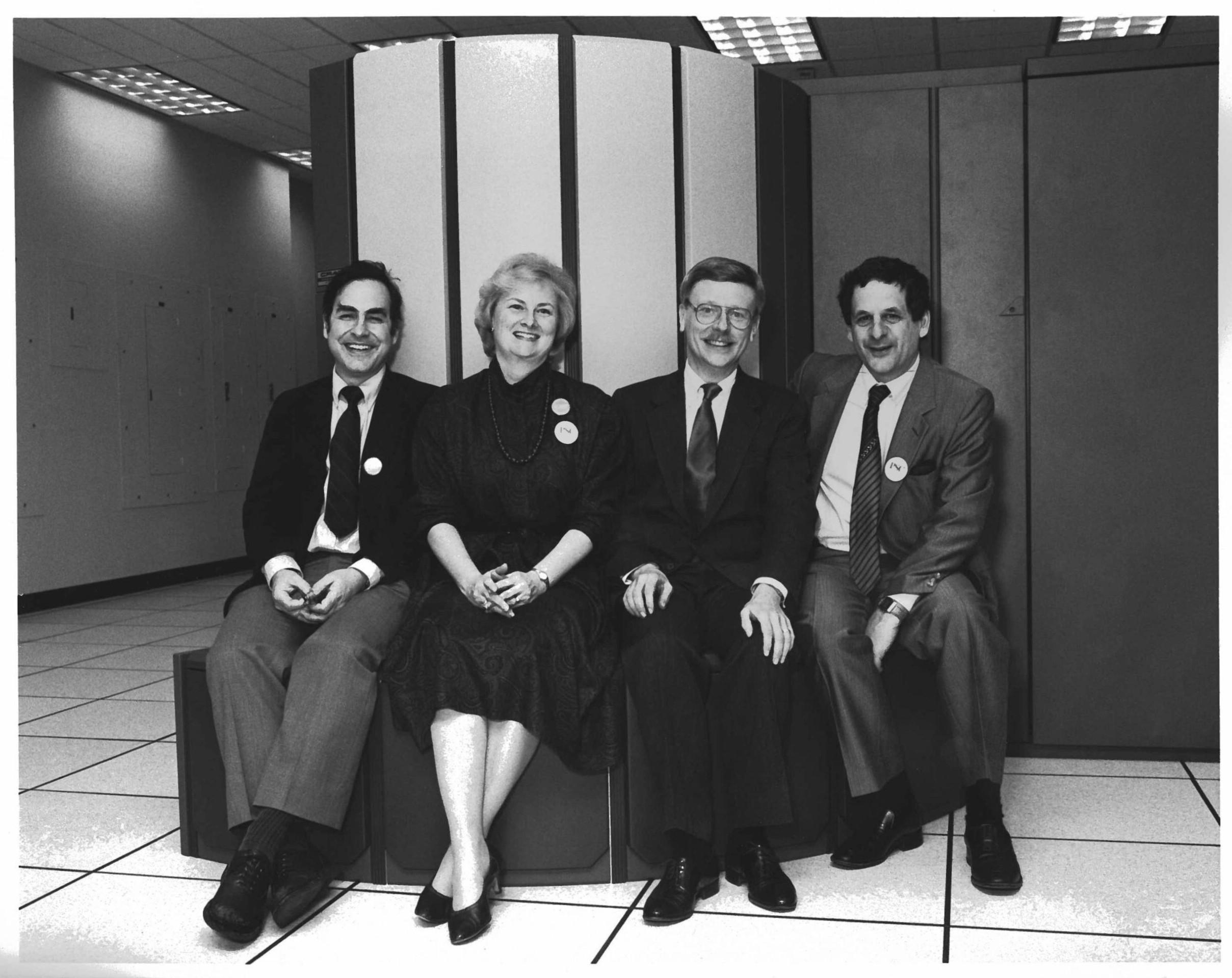
PSC’s founding leadership, left to right: Mike Levine, Beverly Clayton, Jim Kasdorf, and Ralph Roskies.
Shout-out to Emily Voelker and Kassidy Chan for staging the interview room, setting up, and helping with the video and audio recording.