
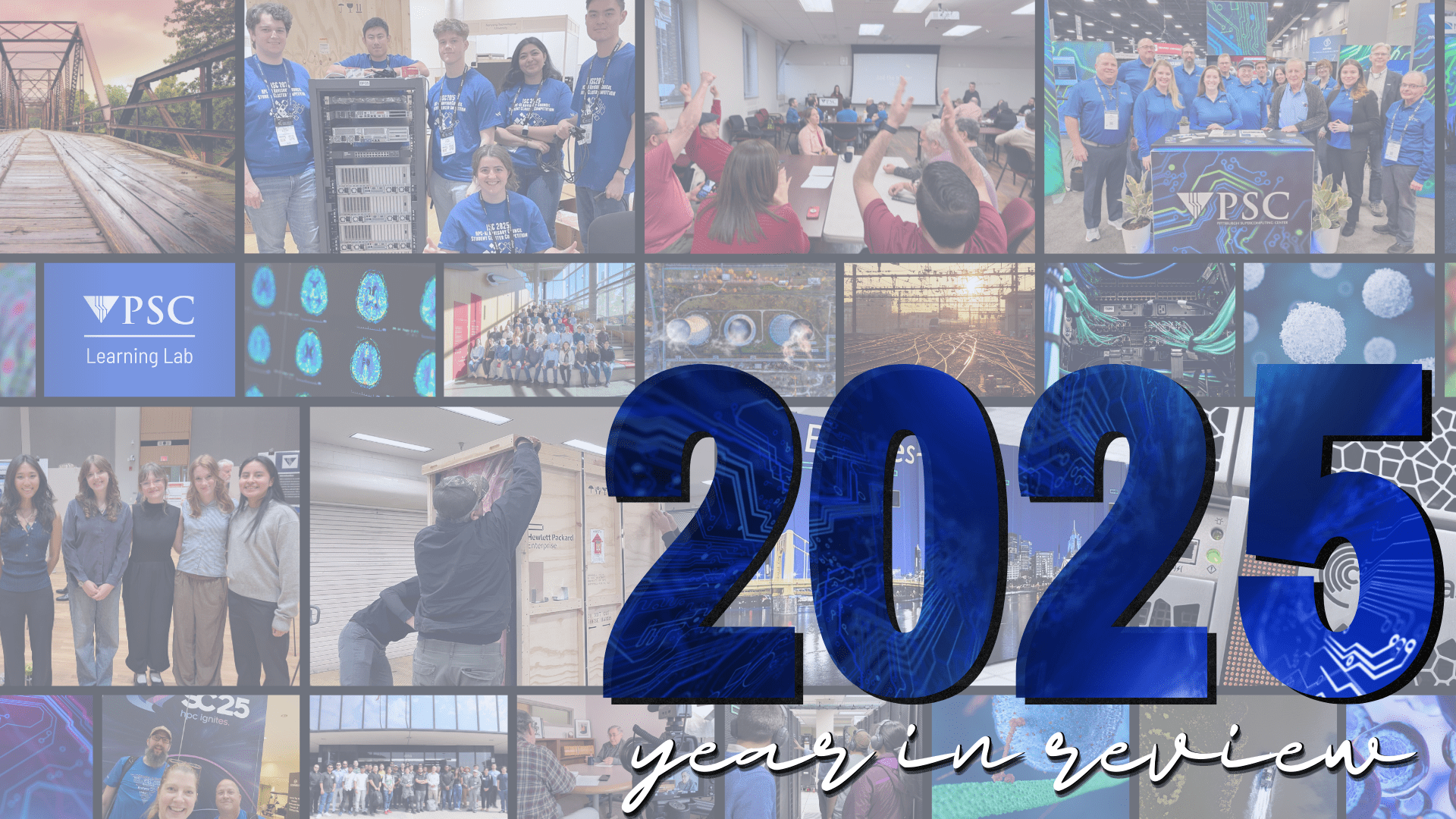
With the cold and snowy weather of December, we know that the winter holidays are nearly upon us, and the new year will soon follow. Now’s the perfect time to reflect on all the PSC stories and events of 2025.
Significant Science Stories
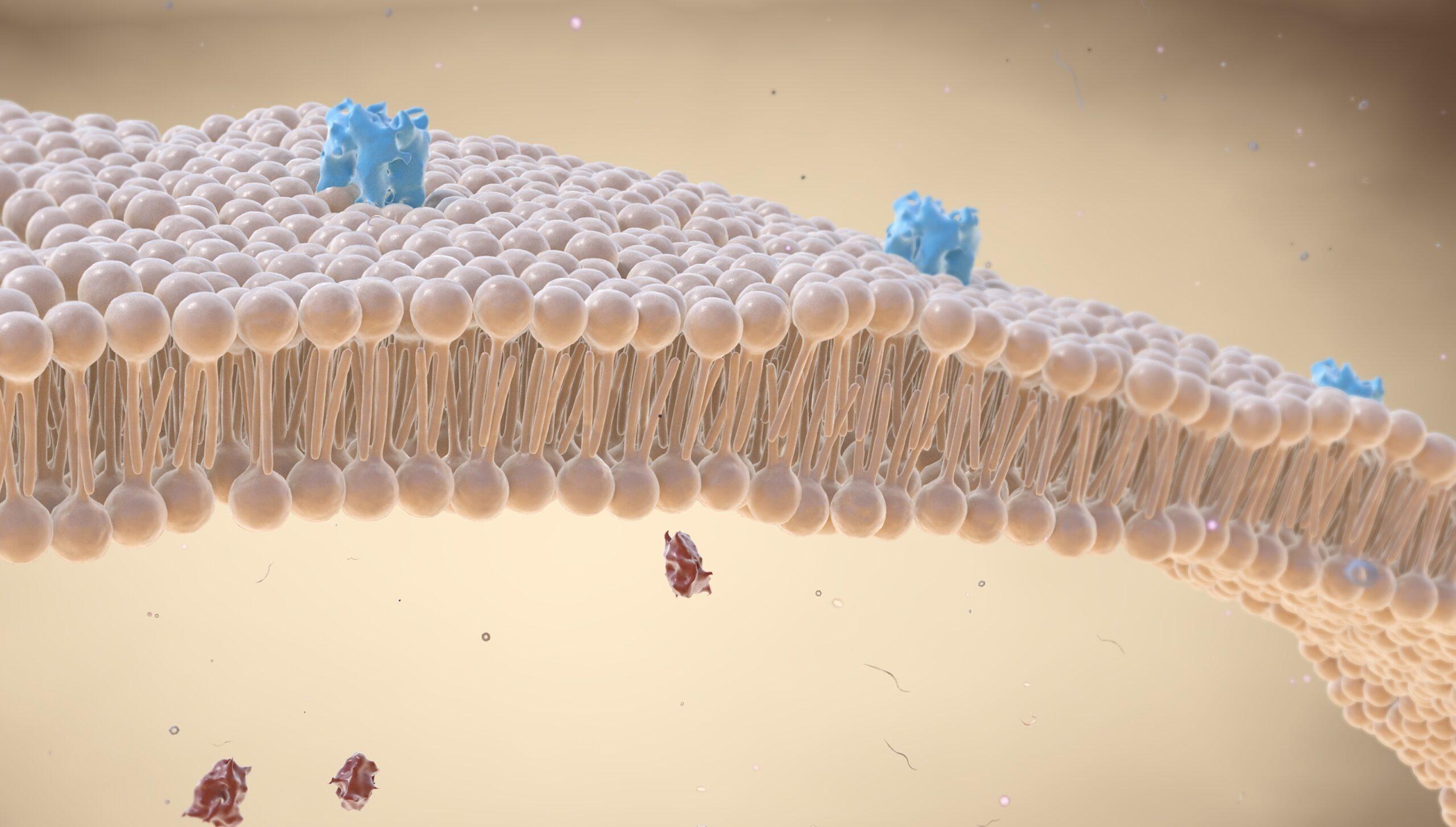
Hidden Order in “Intrinsically Disordered” Proteins – GTPases are proteins that serve as molecular switches in many life processes, but they also contain a puzzling section of wobbly structure. A University of Texas team used the second-generation Anton system developed by D. E. Shaw Research and hosted at PSC to reveal rapidly-changing configurations of these proteins, leading to possible targets for drug therapies. Read more about these proteins.
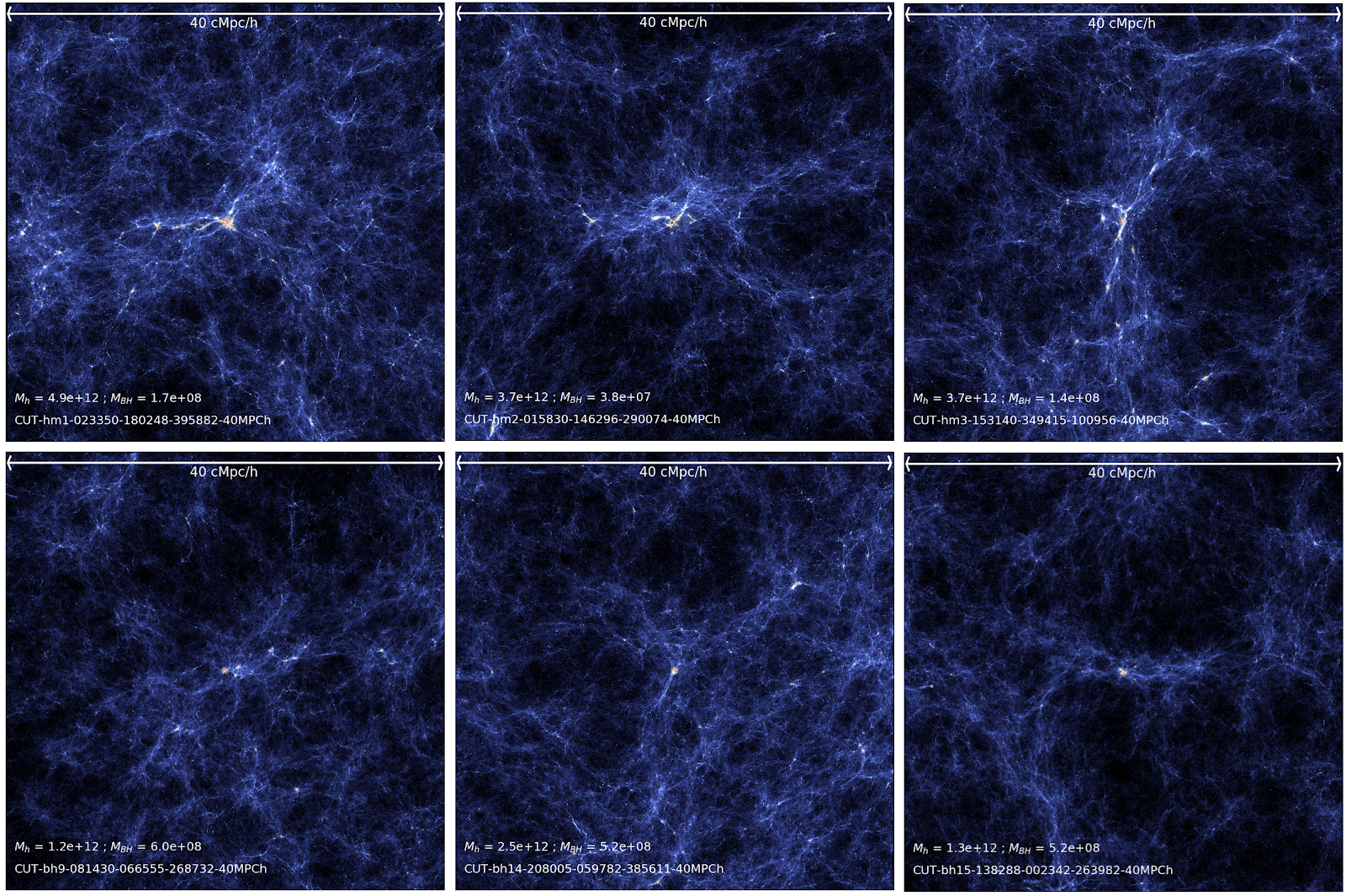
Better Modelling of Massive Cosmic Simulations – Over its life, the James Webb Space Telescope (JWST) will represent a more than $10 billion public investment, so scientists want to use it efficiently. Computer simulation is an important tool for deciding how to use the telescope, but, understandably, simulations of the Universe can become unwieldy. PSC’s AI & BD team and CMU used Bridges-2 to produce a tool that makes a simulation of the Universe more accessible. Read more about this collaboration.
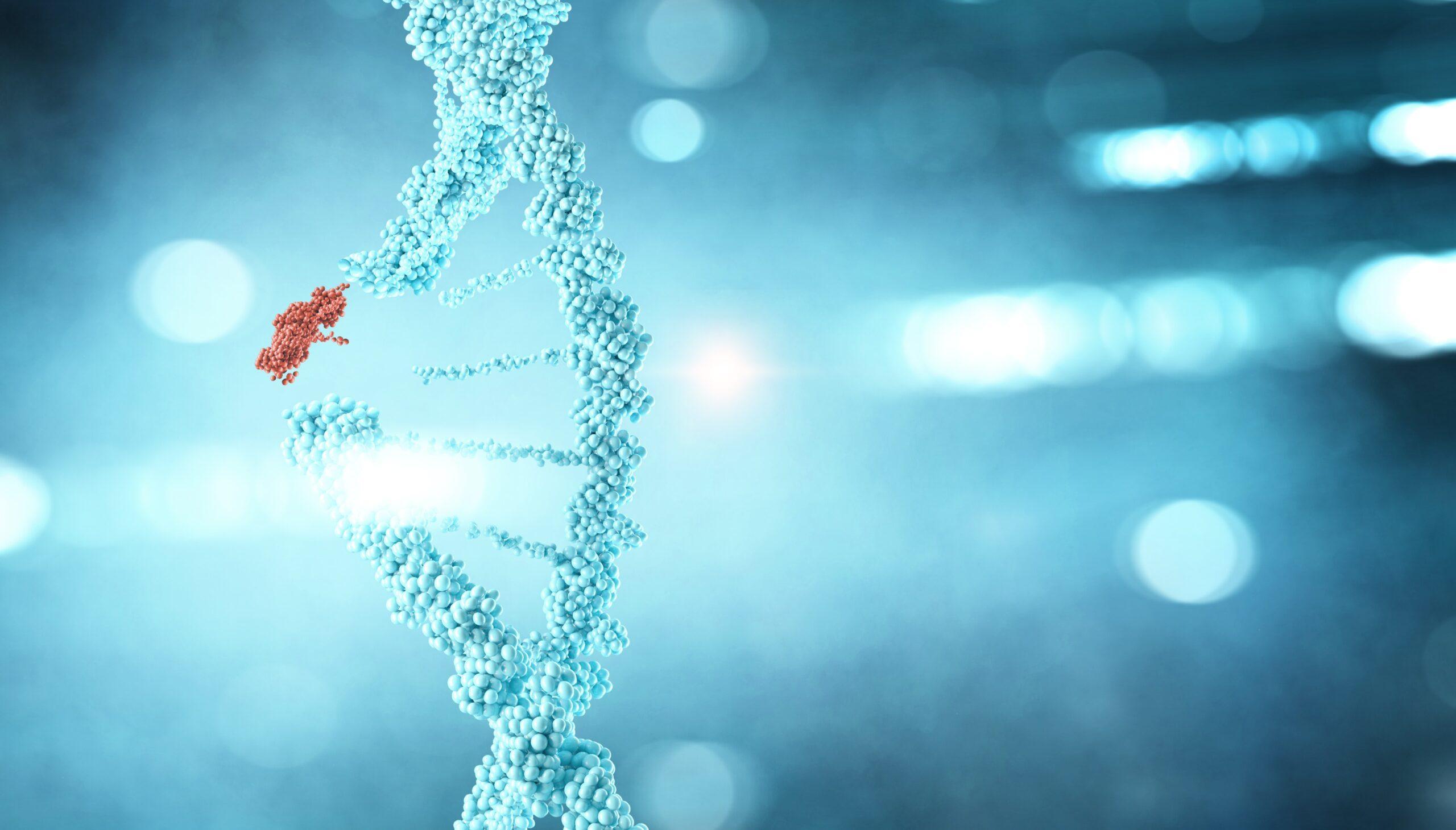
Large-Scale Simulations and Hypermutator Evolution – Real species don’t tend to explode with many superpowered mutants. But mutations that lead to new abilities are very real. A University of Michigan team used PSC’s Neocortex to simulate hypermutators — mutants with an ability to mutate more quickly. Read more about hypermutators.
Wonderful Workshops & Learning
This year saw the launch of the PSC Learning Lab, a curated collection of self-paced educational resources.
The ByteBoost Cybertraining Program returned for a second year, with PSC partnering again with Stony Brook University and Texas A&M University, hosting webinars and an in-person summer workshop.
Our ever-popular HPC Workshop series continued this year, educating hundreds of students monthly on topics including Big Data, GPUs, and parallel programming. Review the content & see the 2026 schedule.
Hardware (and Software) Highlights
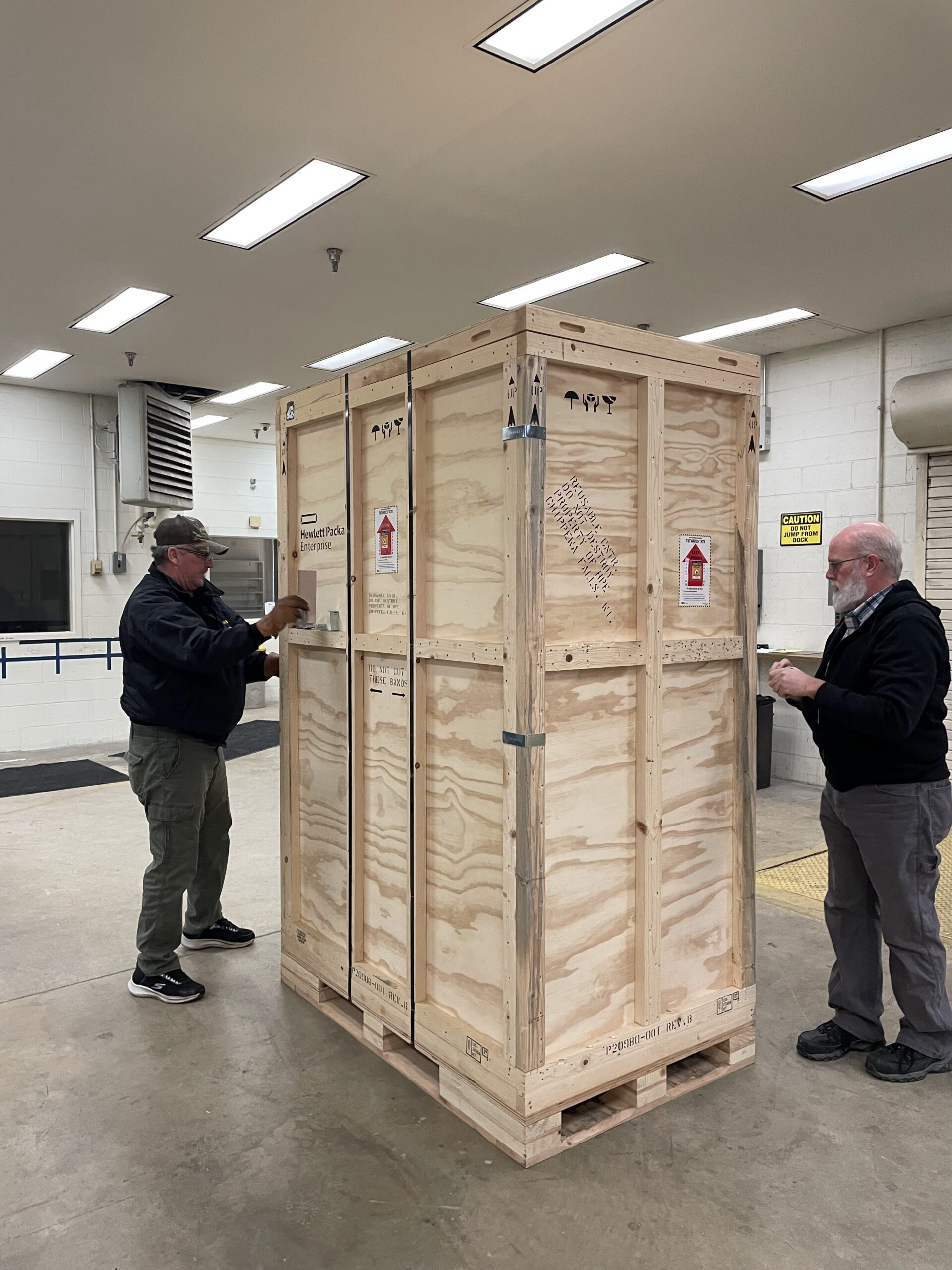
The Bridges-2 team added additional nodes. In January, ten H100 nodes were added to Bridges-2. See a Time lapse of the H100 Install. Additionally, three L40 nodes were added to Bridges-2 in September. Read more about the new nodes.
HPN-SSH (High-Performance Networking SSH) is now the default implementation of SSH on Bridges-2 DTNs. HPN-SSH maximizes network throughput for data transfers over long-haul network connections. Learn more about HPN-SSH.
Third-Generation Anton Supercomputer OperationalWith the latest, third-generation Anton system from D. E. Shaw Research (DESRES), biomolecular researchers will produce results in days that would take years on any other resource.
Awesome Awards
We were honored this year with two HPCWire awards.
Editors’ Choice: Best Use of HPC in Life Sciences: for research on the viral capsid of the HIV virus, pointing to a potential target for better therapies. Read more about this story.
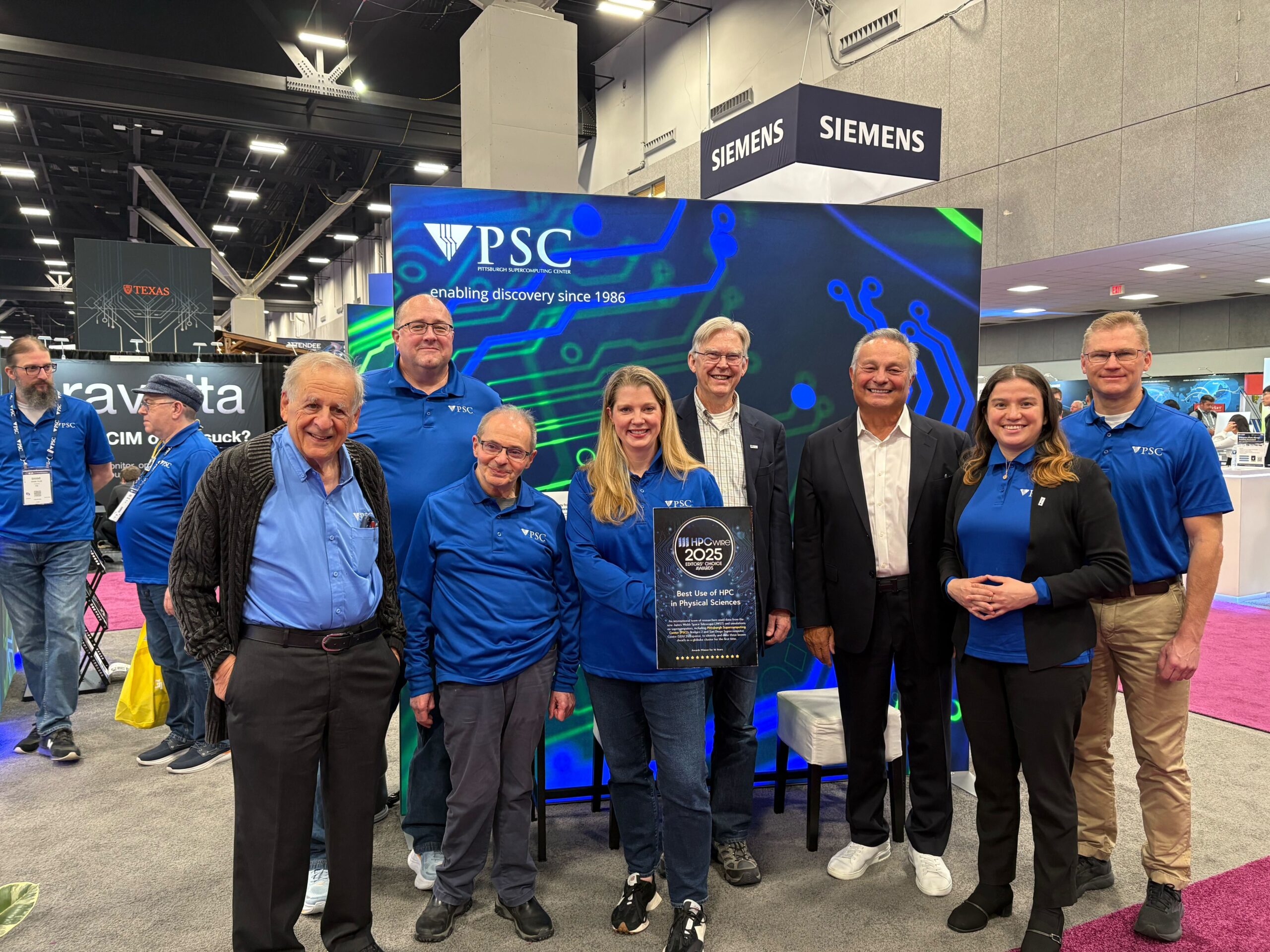
Editors’ Choice: Best Use Of HPC in Physical Sciences: for research from an international team identifying and dating brown dwarfs in a globular cluster. Learn more about this story.
Additionally, three PSC founders were named HPC Legends: Beverly Clayton, Michael Levine, and Ralph Roskies have been installed in the pantheon of the HPCwire 35 Legends Class of 2025. Read more about these PSC founders.
Staff Shout-Outs
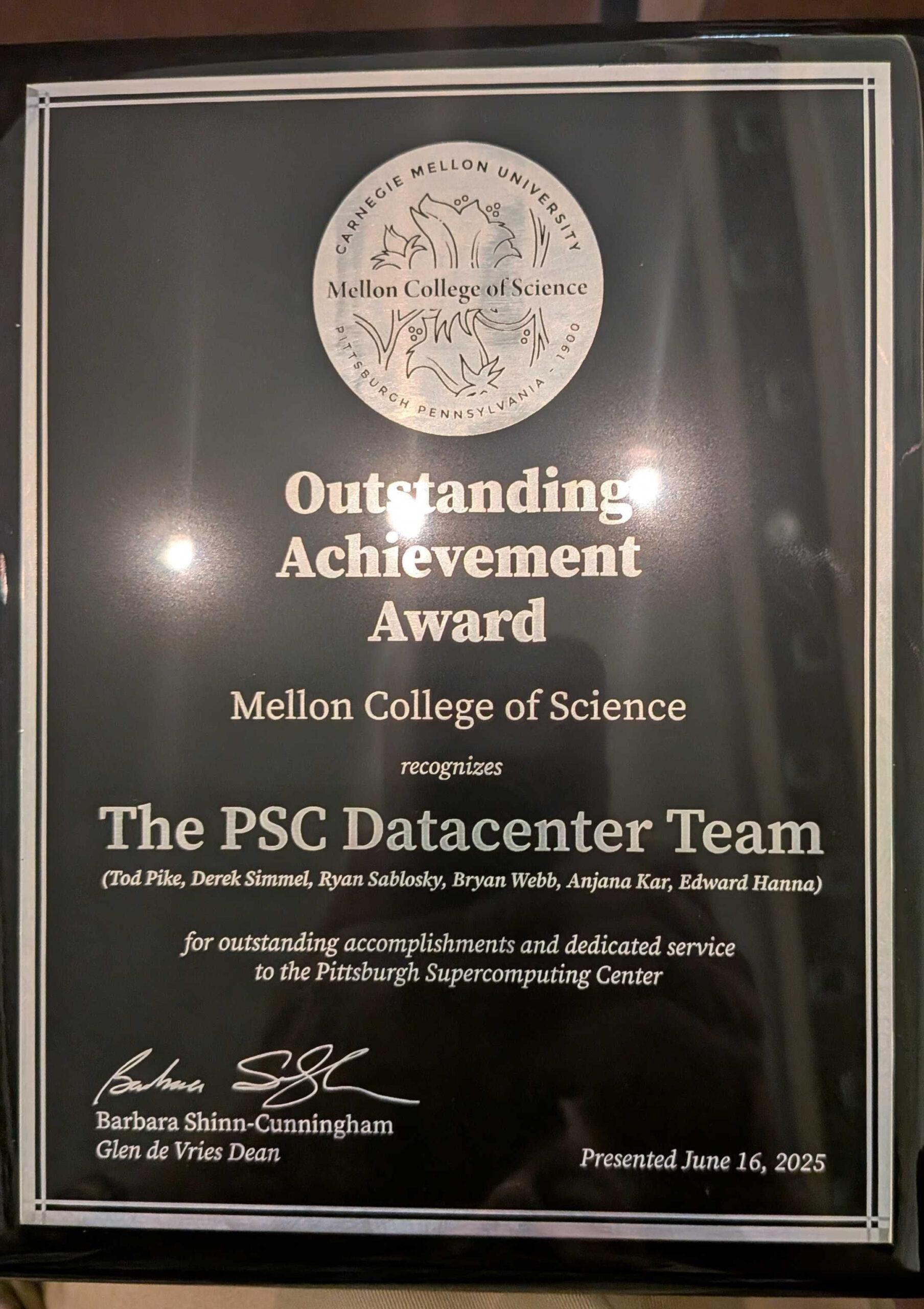
Derek Simmel, Ryan Sablosky, Bryan Webb, Anjana Kar, and Ed Hanna won the MCS Outstanding Achievement Award for their outstanding work and dedication getting PSC’s Datacenter back online.
Megan Carroll was recognized as one of The City & State PA 2025’s “40 Under 40”. Read Megan’s profile.
Chris Rapier won the CMU Staff Council – Rookie of the Year award for his work on extending tuition benefits for the children of staff members.
Intern Intel
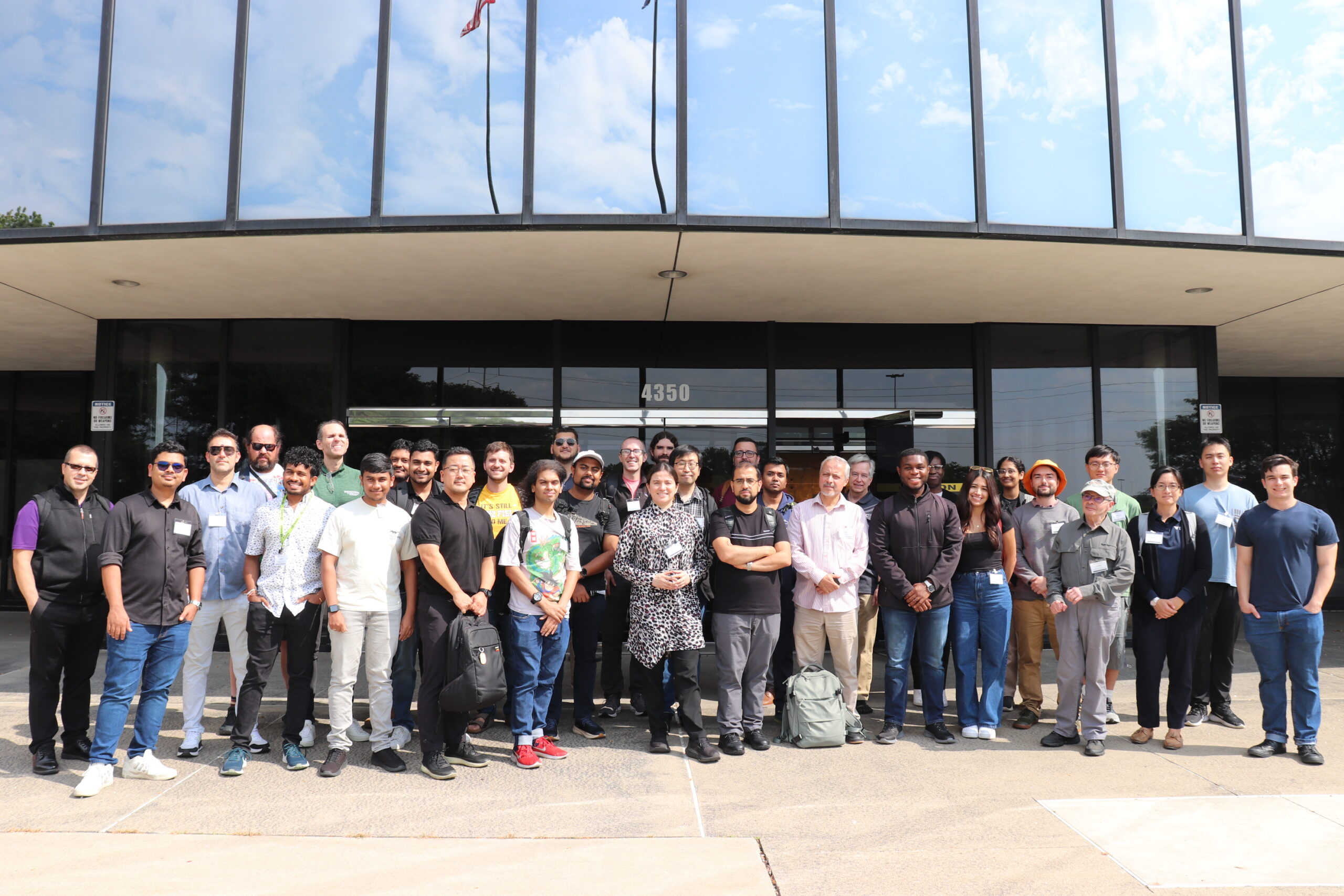
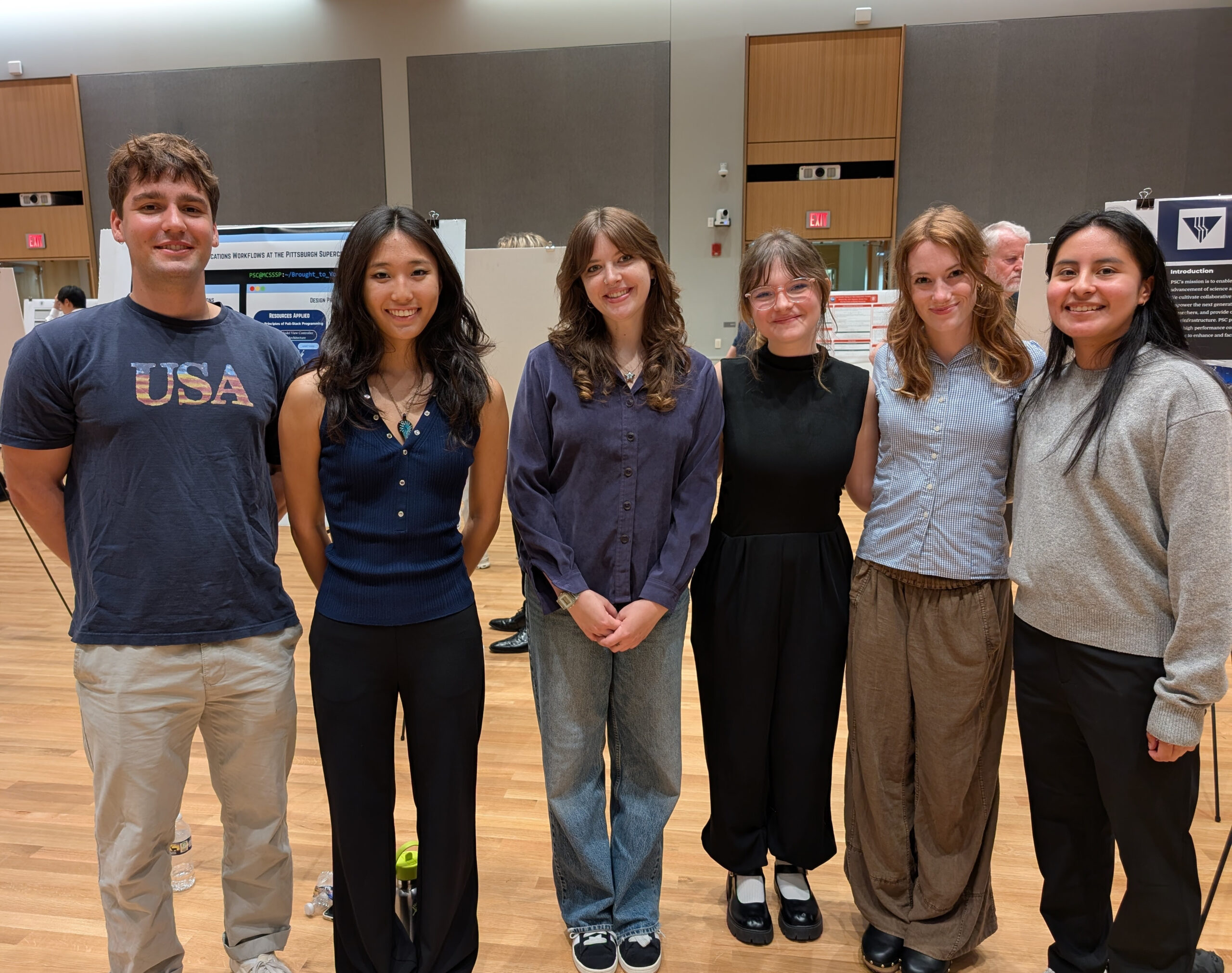
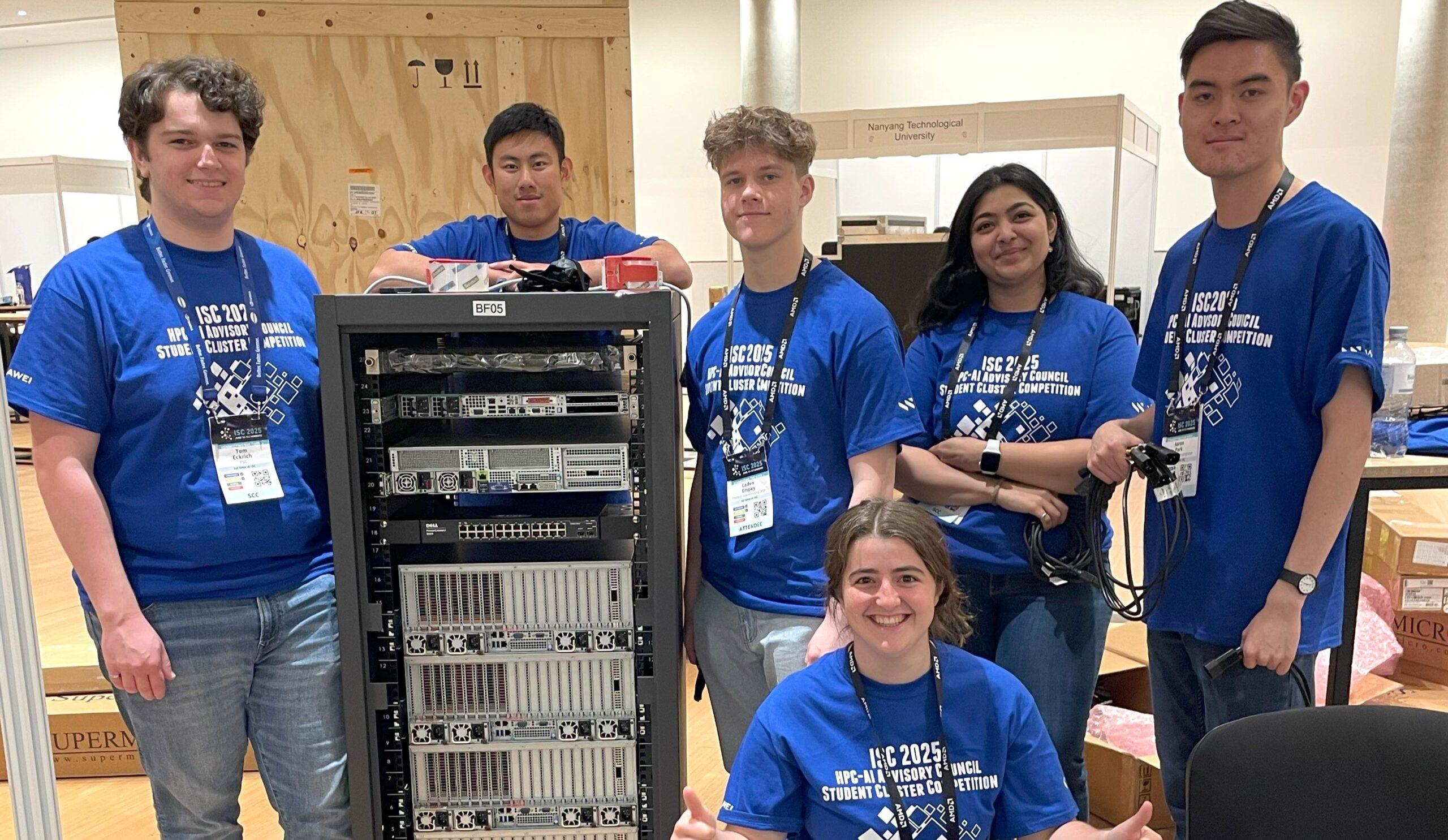
Eleven interns joined us this summer, seven students participated in the ISC25 Student Cluster Competition, and three more interns also joined PSC in the fall. They worked on a variety of projects, made great contributions, and we loved having them with us. We hope to see some of them again next summer!
Cluster Competitions
The Benchmark Beasts, PSC’s student cluster competition team, earned third place at the International Student Cluster Competition in Hamburg, Germany.
PSC also served as the “Mystery Mentor” for the Winter Classic Invitational Student Cluster Competition, mentoring student teams from non-R1 schools. Read all about PSC at the Winter Classic!
Noteworthy Newbies
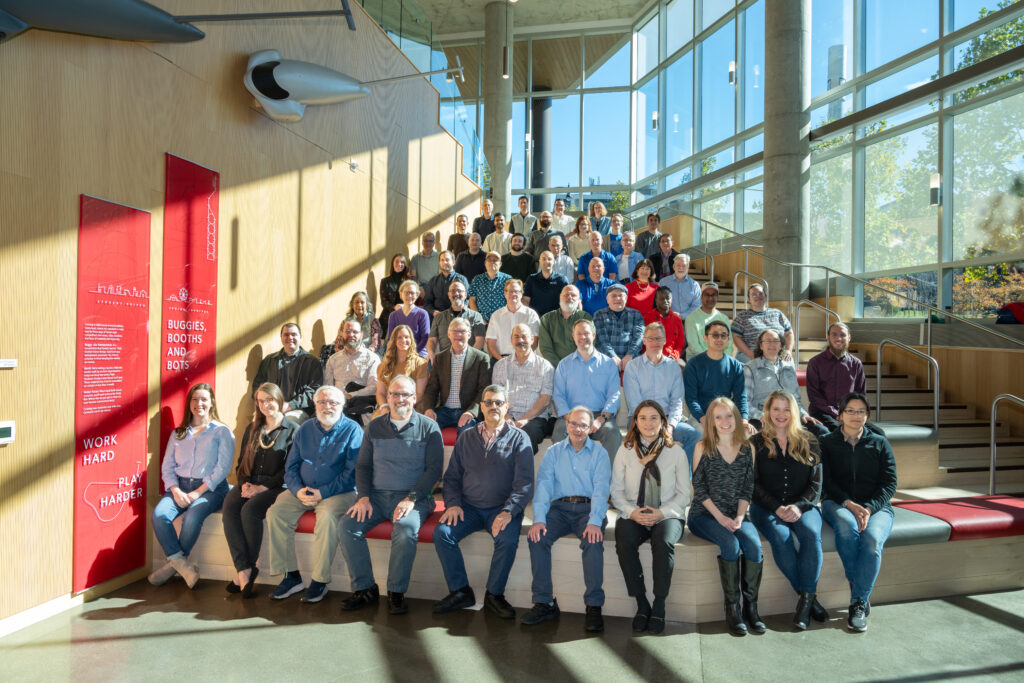
Many new staff joined us this year, adding their distinctive abilities and talents to the PSC mix. Welcome Niraj Nepal, Alex Gregg, Reed Barmada, Kassidy Chan, Eva Frankovic, Keaton Huchinson, Andrea DeLorenzo, and Ethan Gaskin!
Fond Farewells
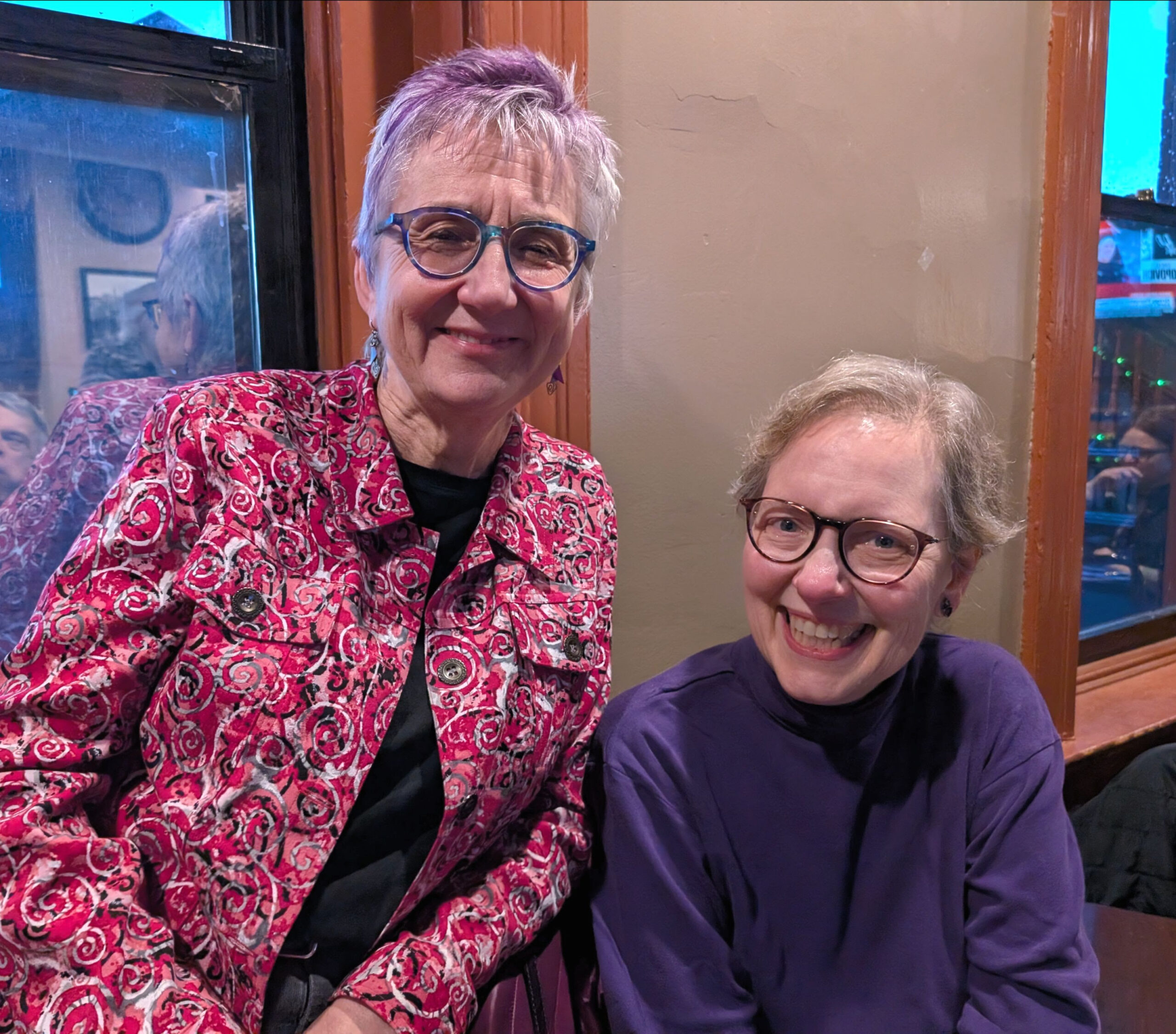
This year also saw quite a few departures from PSC. While we were sad to see them go, we wish them the best in their well-earned retirements or brand new ventures! “Toodle-loo” to Andy Adams, Kathy Benninger, Dave Kapcin, Anjana Kar, Marcela Madrid, Dave Moses, Deb Nigra, Joanne Peca, Tod Pike, Art Wetzel, Dana O’Connor, Jackie Uranic, and Holly Klinesmith!
Happy Holidays!
2025 is put to bed! Where did it go? We’re taking a well deserved break, but we’ll be back in the new year with more stories and science to share. Keep your eyes on us in 2026! Best wishes for a happy and healthy year to all.