
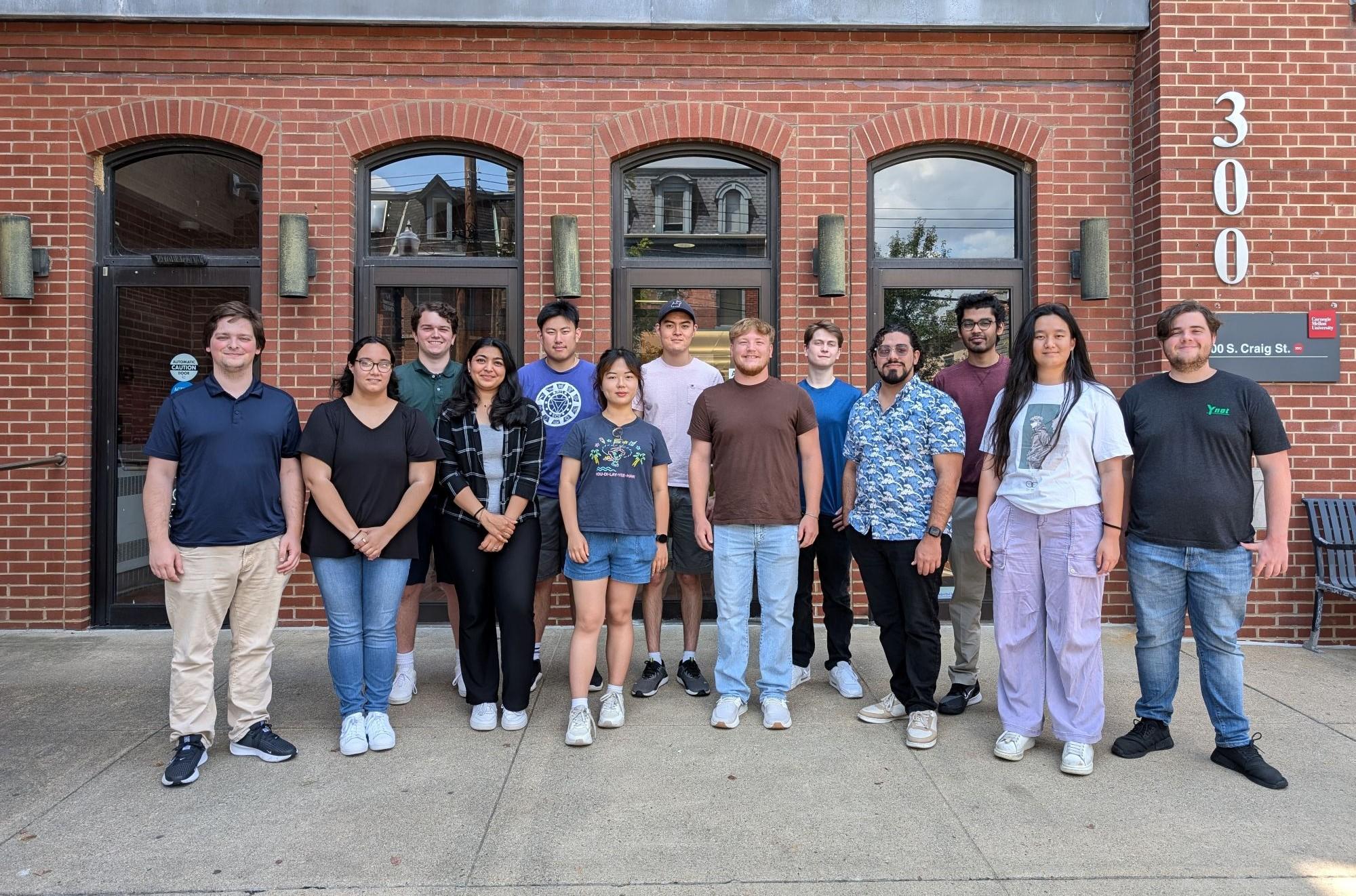
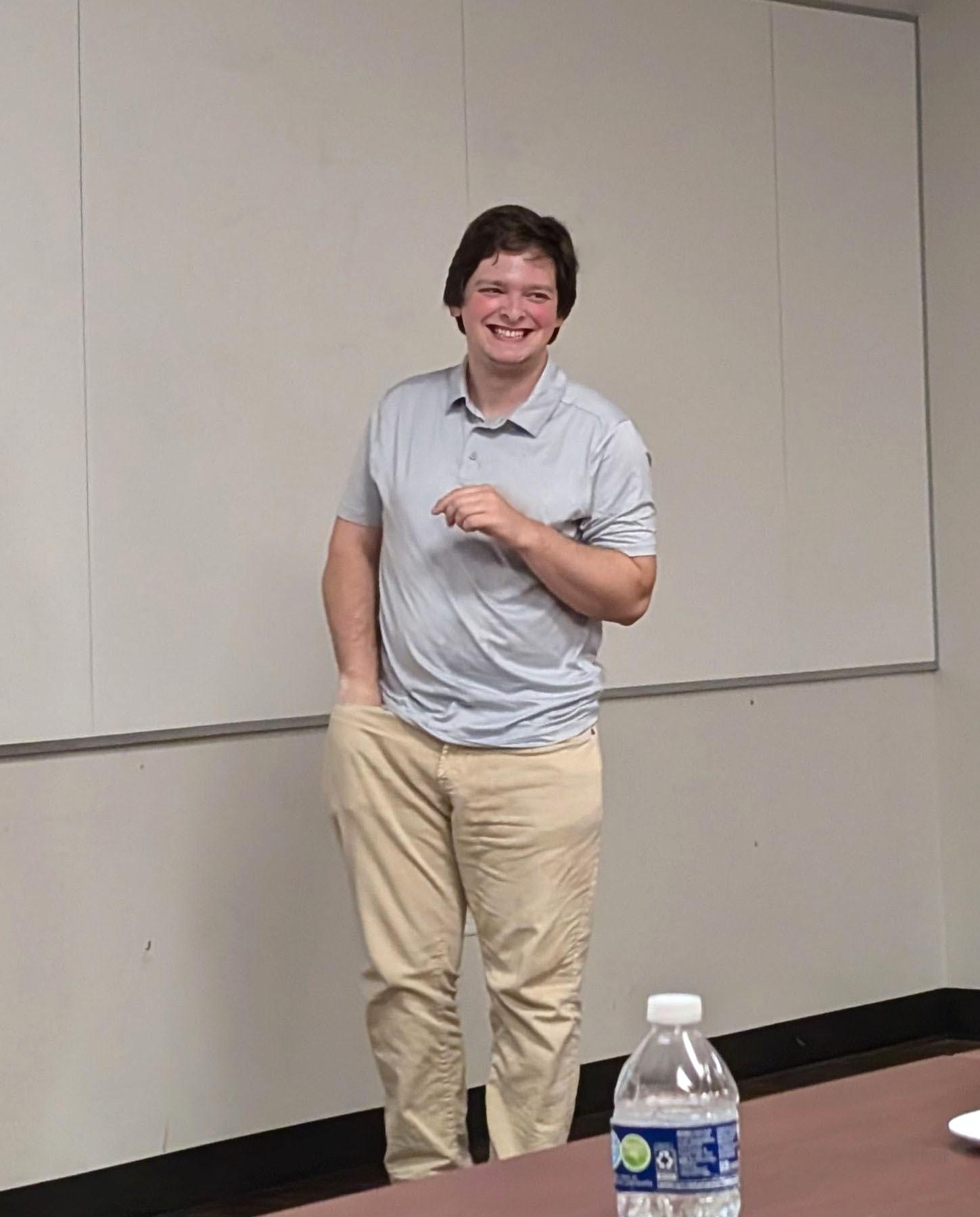
Ben Nalevanko, former PSC intern, sat down with Chris Csonka to talk about his time at the center and catch up with what he’s doing now.
PSC40: Powering Discovery
2026 marks 40 years of PSC. As we continue on with cutting-edge innovation, we look back on four decades of history in computing, education, and groundbreaking research—and the people who made it happen.
PSC DEBUT
CC: How did you learn about PSC and what made you want to work there?
BN: I heard about the opportunity through a little career / internship fair at my school [it] was very small. There were only a handful of people there. At the event I talked to Megan [Carroll]. She laid out a couple of the internship possibilities and they all seemed very interesting to me, so I decided to apply.
CC: When you got to PSC, what kind of projects did you work on? Who were you working with?
BN: I was working with Mitch [Dorrell] on package management.
CC: Tell me more about that.
BN: We were trying to implement a new package management framework for Bridges-2. Specifically, porting portage in and writing installation scripts, essentially, and build scripts for different software packages.
CC: Is this similar to things that you work on now?
BN: Not so much. In my current job, I’m a software engineer, emphasis on engineer. The focus is more on the product and less on the software, unfortunately.
“Knowing today’s latest technologies, while helpful, won’t carry you through a full career. Picking up new skills is a powerful skill of its own. Like anything else, that gets easier with practice. Ben’s internship involved learning to prepare a particular software, using that knowledge once, and then starting over again with the next piece of software. Sometimes procedures were similar, but often they were totally different, and each had its own quirks.”
— Mitch Dorrell, Ben’s internship mentor

NOW AND FUTURE BEN
CC: Talk a little bit more about what you do now. What’s the nature of the work?
BN: I work for a company, SMS Group, as a level 2 HSM (hot strip mill) automation engineer. SMS is not a manufacturing company, it sells services, software, and hardware to manufacturing companies. Specifically, Level 2 sits between the embedded systems and the enterprise systems. It handles tracking through a hot strip mill, model interactions, and reporting and also bridges the gap between low-level software and high-level software.
CC: Does it involve AI or anything of that nature?
BN: Nothing I work on is too involved with AI, but certain aspects of the models are. There are elements of machine learning in there, but it’s not something that I touch too much.
CC: Given your experience at school, PSC, and now in the working world, where do you see yourself five years from now?
BN: Current plan, if all goes well, I’ll still be with the same company. Still a software engineer, I’m having a pretty good time with it. Career-wise, just doing what I’m doing.
CC: When you worked with Mitch, were you working with specific languages?
BN: Primarily Bash scripting. In the particular framework we were working with, Portage, all of the installation scripts are written in Bash. That was the primary language, so to speak.
CC: What other impressions did you have of PSC when you worked there?
BN: Inviting, very invested in teaching the interns, which I liked. It was clear that was the focus. I learned a lot. I learned how Linux systems work, things that didn’t directly pertain to things I was assigned to. I got a better understanding of computing, and computational systems in general. My biggest takeaway was the strong focus on education.
“Ben’s internship intrinsically involved continuous learning, and that’s not something everyone’s prepared to do. His success depended on his ability to learn what he needed to know for that day, and then learn something totally new for the next day. If you can do that, you don’t need a crystal ball to be prepared for a full career in any technology tomorrow may bring.”
— Mitch Dorrell, Ben’s internship mentor
CC: That’s the kind of place that PSC is. Most people, whether they’re a student, staff member, etc., that’s something important to them, learning and teaching and the interaction of that space.
BN: It’s a good environment to be an intern in.
CC: It’s a good environment to be in, regardless. I was never a student at PSC or CMU, but I’ve certainly found it to be a very welcoming place. People are generally easy to work with. They’re invested in helping you succeed. It’s not just everyone out for themselves.
BN: Yes, that was my impression.
AI IMPACTS
CC: What do you think will be important fields going forward in computing or engineering?
BN: AI is going to be pretty significant going forward. At work, it’s surprisingly useful. AI is a tool that can automate a lot of things. It might be similar to the invention of the calculator: instead of needing rooms full of people, say, junior engineers, to write code, you can automate the tedious parts very quickly, and then it just becomes a question of design and architecture.
CC: So it’s like a force multiplier.
BN: It is. I’m concerned that there’s going to be less of an incentive for companies to train new people. I think it will cause issues. There’s always going to be the need for people who know programming and understand how computing and computational systems work. But some of the grunt work is getting cut out right now.
CC: I agree 100%. I’ve read that AI isn’t necessarily replacing jobs, but people who are learning to use AI, in any field, will make progress. People who don’t embrace it, they may be left behind.
BN: Unfortunately, there’s people who, regardless of whether they try to use it, are going to get left behind. It’s not one thing or the other. It’s going to cut jobs. There will be new jobs, but probably not as many. From my own experience, a lot of friends in similar positions coming out of school ended up not finding jobs in engineering, tech, programming, etc. They’re all having a lot of trouble. I was lucky I got a job in my field, but a lot of people are having a tough time.
CC: That’s a common observation from a lot of people in the job market now. I don’t know if that’s all AI or it’s just a tough economy right now. I think there’s a component there.
BN: It could be because this is a relatively new field, a lot of people flooded into it pretty quickly. You’re not going to be making $150,000 right out of school like when I started school. I think a lot of people are in the same spot.
CC: I’ve been working for a while, and I can remember when programming, fields like that, were considered sure bets. Go into that, you’ll succeed. I’m not sure that’s the case today.
BN: No guarantee, that’s just my opinion. Hopefully that answered your question?