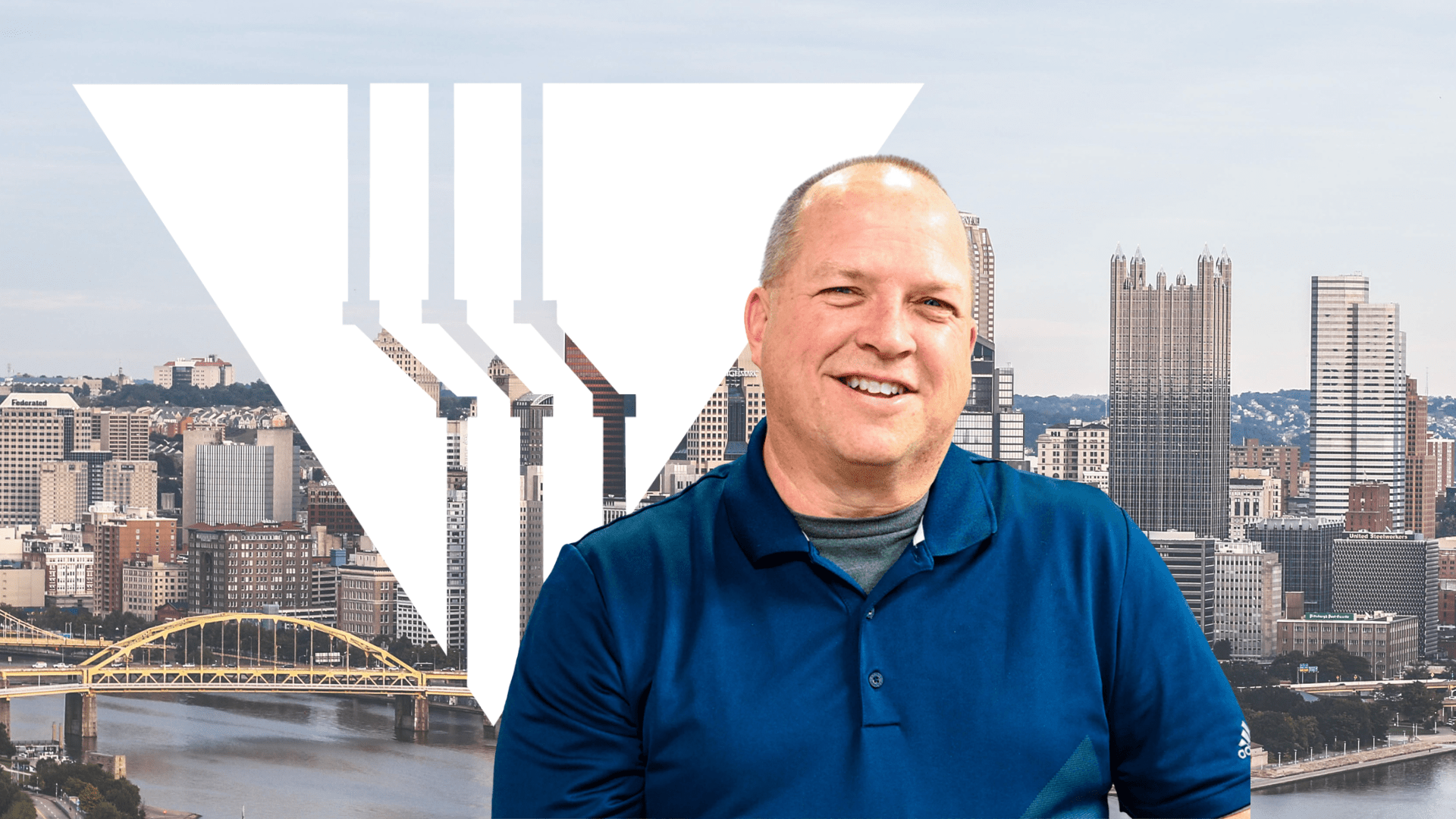
Ken Hackworth, Senior Allocations Manager, PSC.
Ken Hackworth talks about his storied career at PSC, starting as a student, ultimately hiring, working with, and helping shape the careers of dozens of PSC interns, many of whom still work at the center.
PSC40: Powering Discovery
2026 marks 40 years of PSC. As we continue on with cutting-edge innovation, we look back on four decades of history in computing, education, and groundbreaking research—and the people who made it happen.
In the beginning…
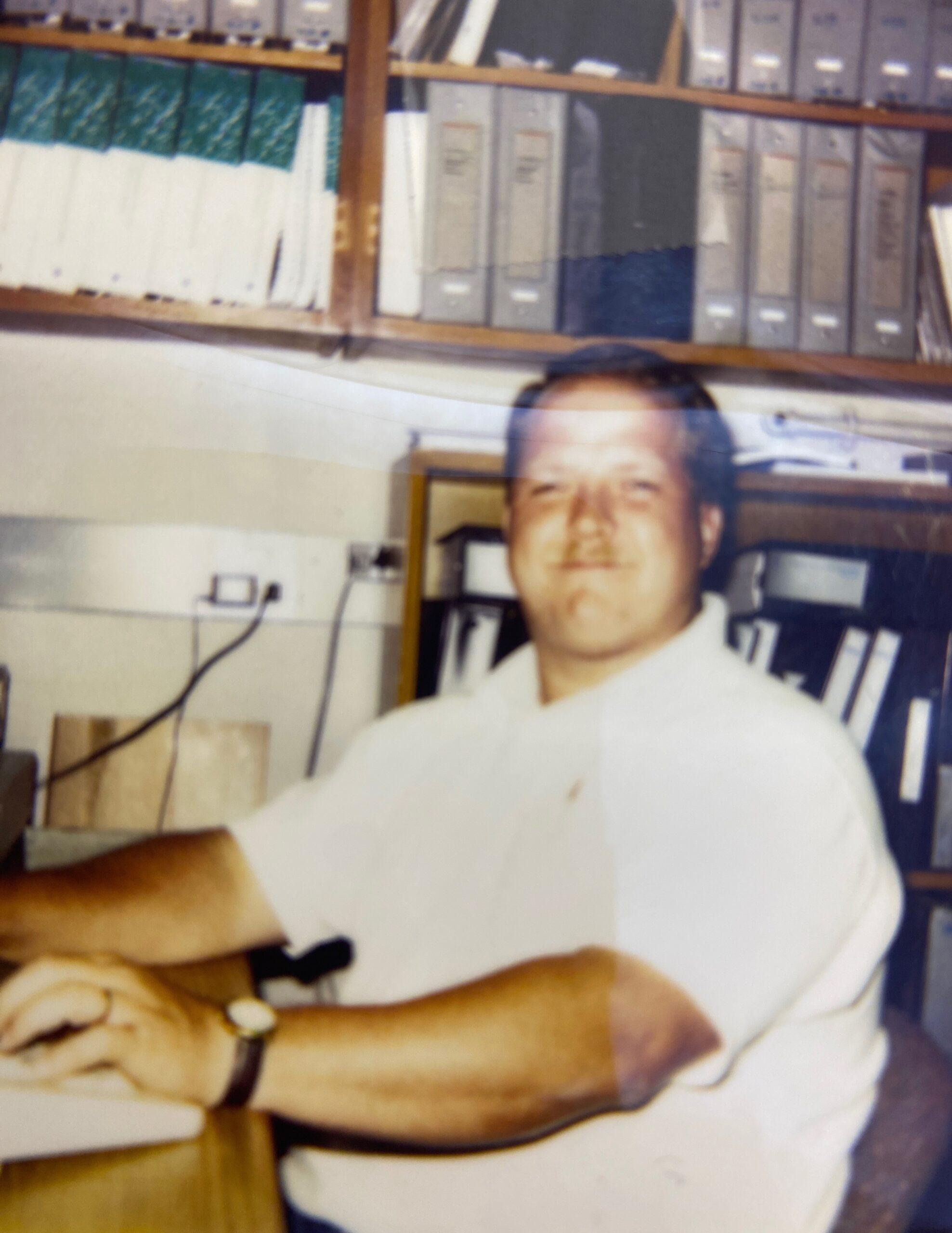
I go back many years,1987? I started as a student, a computer science minor at the University of Pittsburgh. Back then, PSC hired multiple students at a time. We were the help desk, but it was a very manual process. There was no Internet, there were no webs, nothing. Everything was offline. We even had a way to sell Cray manuals to users! There was e-mail, but it wasn’t like e-mail now. And modems to connect to the computers. You dialed up with a modem and PSC provided a free, dial-up service. The students all shared this little cubicle area. Usually, we had two students at the phones to take questions.
I can remember going into Deb Nigra’s cubicle and saying, “Hey, Deb, I got this question I need help with.” As students, we relied on the Consulting Group. At that time, it was led by Bob Stock. There was a group of students that came in at the same time: Eric Ball, Jeff Dubovecky, and me. Bryan Webb and Chuck Maiden, Tom’s uncle, were already there, as well as a few others.
Students became trainers or mentors of other students. You know, show me how this works, how to do this? But the neat thing about it was the team, and I’ve always stressed this, at PSC the team is very important. And then every year, as students graduated in the spring, there would be another call for students to come in, and everything would repeat. Later, I became a trainer or mentor to the next group of students. Like Alex Ropelewski and Andrew Adams.
“Students became trainers or mentors of other students. You know, show me how this works, how to do this? But the neat thing about it was the team, and I’ve always stressed this, at PSC the team is very important.”
HANDS-ON HELPERS
We were very hands-on. We learned quickly how to deal with questions, problems, and the like. But for really detailed things, we would pick the brains of the specialists at the center. Like Doug Fox, who was an early staff member at PSC. He was part of the team that wrote the Gaussian software. “Doug, can I ask you a question about the machine?” He’s like, “Sure. What’s going on?” It always felt like there was someone there to help you, even if they had a PhD in chemistry or whatever, they’re going to help these undergraduate students with no clue about the machines. That was what was so neat about the place.
We worked out of any extra space. Sometimes we were crammed into offices with other full-time staff members. If there was an empty office, the students would take over that space. In addition to the help desk, especially during the summer, when we could work full time, they would give us projects. It could be programming, working with the networking people, even documentation. And any other job. Vivian [Benton] had a binding machine. We learned how to collate, bind, and put manuals together, and do mass mailings. Students would take on any role, whatever was needed, they got involved.
LESSONS LEARNED
When something has to happen at PSC, like setting up a room, think about who usually jumps in to volunteer: Stephen Deems, Robin Scibek, Ed Hanna, etc. Some of these folks are directors here at the center. But, as students, that was part of our role. You just jumped in and no job was beneath you. And as a former student, you still carry the notion that, if somebody needs help, you step up. Just recently, they asked for volunteers to take apart the Anton machine. There’s those who always say, hey, I’m available to help. One of our newer staff members, Jillian Lehosky, got to do it. Hey, there’s a chance for you to get involved. I always encourage all my staff the way I was encouraged when starting out.
But you were the first to learn. Nothing was beneath you. That was always a neat thing for the students: working as a team, getting to work with the staff, seeking their help. Back in the early days, there were lots of students. I was fortunate to hire many of them, and we were able to recommend them to other groups as they graduated. We’d say, “This is a good one. You should interview them.”
PSC CONNECTIONS
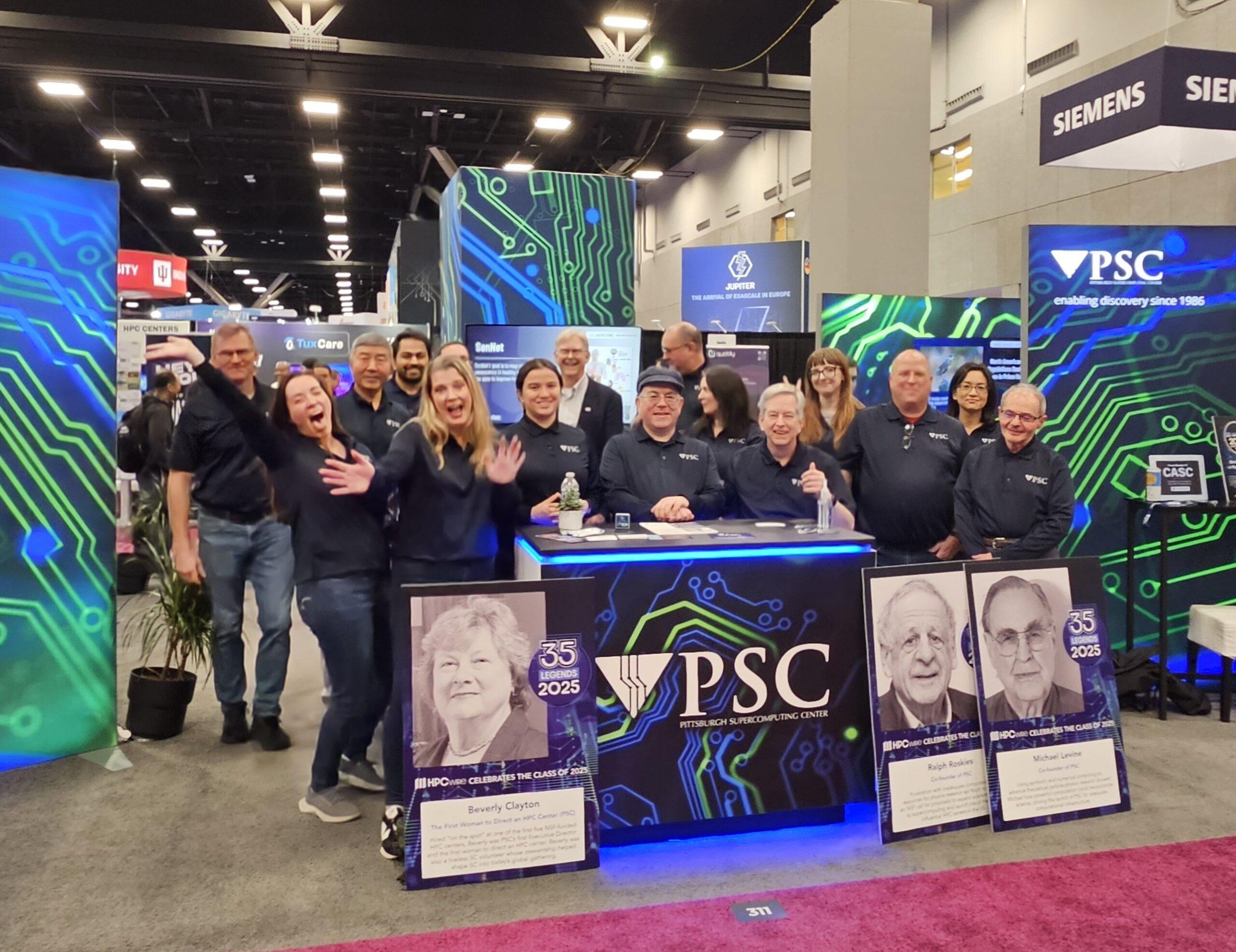
Tom Maiden, Ed Hanna, Burt Cubbison, Stephen Deems, and a few others we hired. Adam Fest was in that “Six Degrees of Deb” article. There were others like Brian Johanson who recently left. Some students even married each other. Some are still married, some aren’t. To each their own. When people hear about something good, they want to tell others. That’s natural. Whether it’s a relation or friend, they’d try to join in.
We had young people whose nephews or nieces were going to nearby universities, and we considered hiring them. I’d see 50–60 resumes from students. You’d get students from the same major or fraternity. We valued certain students’ opinions. If they recommended someone, we’d usually give them an interview. Most times, they knew what the job required.
Both Rob Light and his brother worked at PSC. Ed Hanna’s brother worked there too. That’s how Ed found out about the job. I probably hired a couple hundred students over 15–20 years. Some we still hear from. If we travel to their city, we reconnect. When Supercomputing was in Atlanta, we told Adam Fest we were coming. Six of us ended up at his house for a barbecue. He brought his daughter to the show floor, and we gave her a tour. We’ve seen these interns grow professionally and personally. Now we see their kids come looking for jobs. That’s legacy.
“They weren’t just answering calls, they were supporting researchers, sometimes Nobel Prize winners. I’d tell them to Google the names they saw. They’d realize they were helping top scientists move their work forward.”
MENTORSHIP MOMENTS
I used to coach students on resumes before interviews. I’d tell them, “You’re selling yourself.” Working at PSC gave them something strong to sell. They weren’t just answering calls, they were supporting researchers, sometimes Nobel Prize winners. I’d tell them to Google the names they saw. They’d realize they were helping top scientists move their work forward. I’d also help them dress for interviews: fix ties, lend a belt, straighten collars. In some ways, we were like parents or mentors. It went deeper than work. They’d talk about relationship problems. We’d listen, sometimes with other students weighing in. We were there to help however we could.
Almost every student who came through PSC went on to be successful. Some run businesses, some are directors or CEOs, others went into government or private industry. Whether we made the difference or just contributed, we played a role. We had a student from Carnegie Mellon who was brilliant but nervous, even ordering pizza made him anxious. We worked with him to help him grow. He later became hugely successful in fantasy sports and even donated back to PSC.
THE PSC FAMILY
We’ve also seen the tragedy of students passing away, whether through violence or otherwise. One student didn’t survive 9/11. Those were tough days for us. Mentorship was always central. We weren’t just teaching computing—we were guiding people. Sometimes that meant tough love. I told one student his drinking was heading in a bad direction. It was harsh, but he’s doing well today. Another student’s grades were slipping because he was too distracted. I told him he couldn’t work the next semester unless he improved. He came back stronger. You can’t help everyone, but you can try.
That’s what PSC has always been, a family. If someone needs help, you help. Whether it’s lifting a refrigerator or supporting someone through a crisis, you show up. That culture came from leadership. Doors were open. You could talk to anyone. It was always about being a team and making sure no one was struggling alone. Over time, policies change, but that core feeling remains. We even pushed for PTO donation when staff members were battling cancer. Eventually, that became possible.
I’ve been at the center since 1987, nearly 38 years. It’s family. We’ve seen people leave, like Deb, and it’s hard. But the mission continues, and we try to pass that spirit on to every student: when something needs done, you step up and help.