
Incorporating Black Holes in 2005 Helped 14-Billion-Year Simulation Mirror Real Universe

PSC40: Powering Discovery
2026 marks 40 years of PSC. As we continue on with cutting-edge innovation, we look back on four decades of history in computing, education, and groundbreaking research—and the people who made it happen.
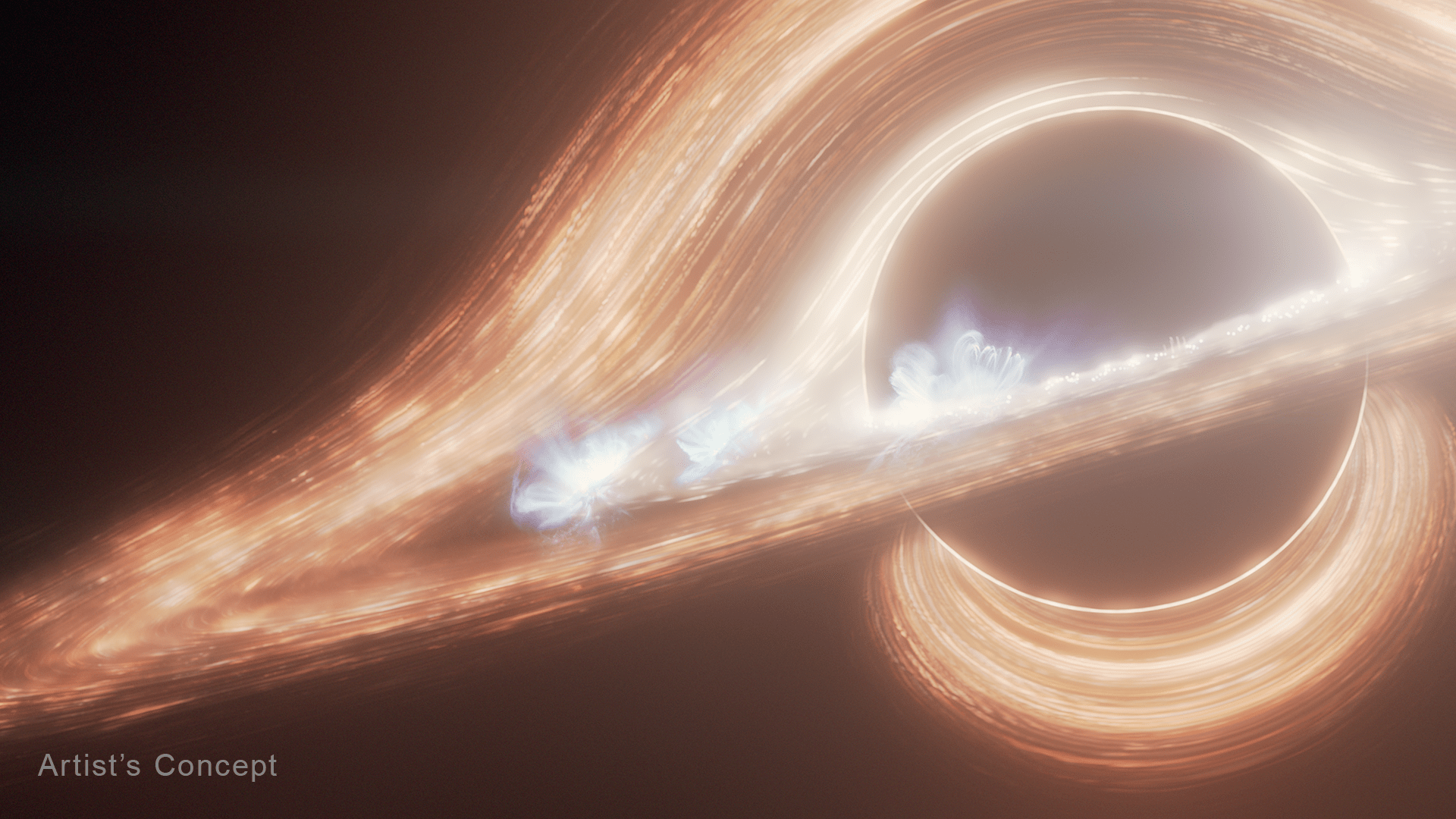
We often think of black holes, whose gravity is so strong even light can’t escape them, as a destructive force. But a simulation that a Carnegie Mellon University team ran on PSC’s Cray XT3 in 2005 showed that they’re far more than that. The team’s sim of the Universe, the first to incorporate black holes, showed that these awesome giants were critical to forming a Universe that created today’s galaxies — and which made us possible.
WHY IT’S IMPORTANT
If there’s a ready-made villain in cosmology, it’s the black hole. Collapsed stars that are so dense and heavy that they warp space and swallow their own light, they’re a staple hazard for galactic astronauts.
In reality, black holes are both less threatening and more interesting than that. For one thing, if you’re in a stable orbit around a black hole, it won’t gobble you up. For another, it turns out that black holes aren’t nearly as treacherous as space operas make them out to be — or as rare as we once thought. Giant black holes sit at the center of nearly every galaxy, including, famously, the Sagittarius A* monster at the center of our own Milky Way.
Our resident massive black hole doesn’t threaten us. Instead, its formation and the formation of our galaxy, and so our existence, are linked in ways that we are just beginning to understand.
In 2005, Tiziana Di Matteo of Carnegie Mellon University wasn’t satisfied with then-current computer simulations of the Universe and its formation of the time. She had good reason. For one thing, the limitations of even the most powerful supercomputers of the day had restricted cosmologists to simulating only small, very simplified versions of the process of universal evolution. Another, huge shortfall was that these sims were too small to incorporate black holes. Scientists at the time were beginning to realize these dark stars were both far more common and played a greater role in how the Universe developed than they’d originally suspected.
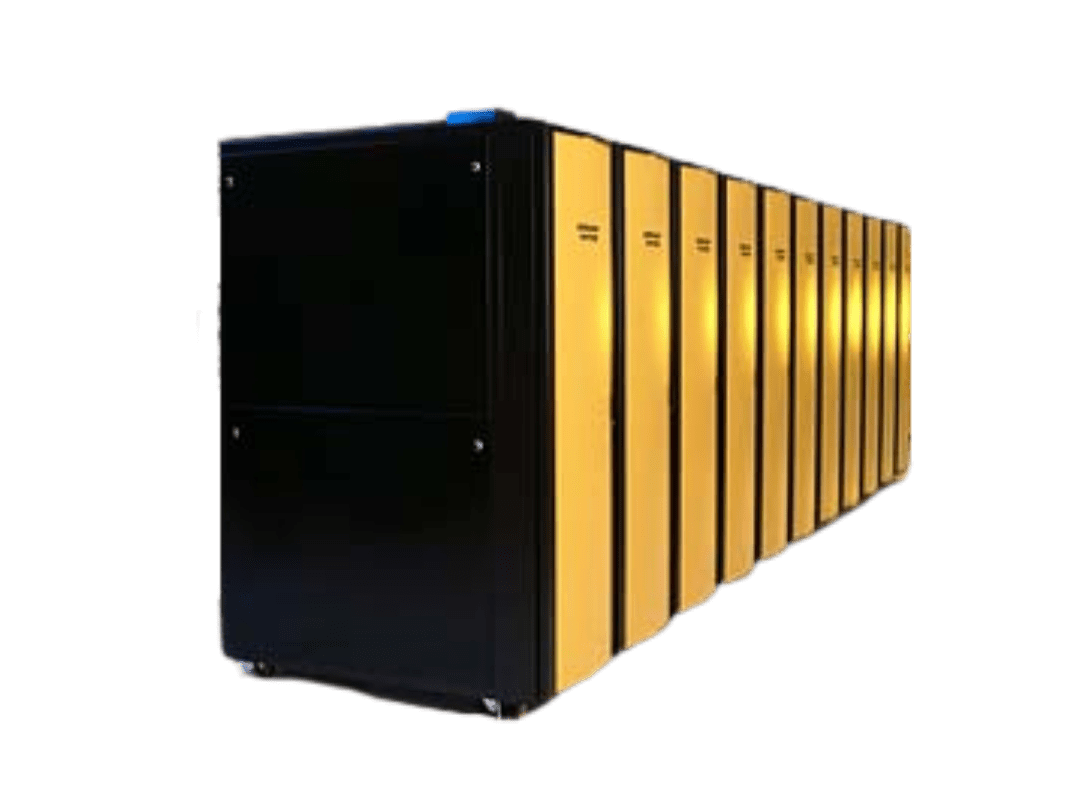
Di Matteo and her team tackled the problem using PSC’s then-flagship Cray XT3 supercomputer.
HOW PSC HELPED
The XT3 was a monster in its own right. Offering a then-world-class 2,068 processors, tightly linked with an interconnect that joined those processors with lightning speed, it had the ability to expand the CMU team’s simulations way beyond what had been possible previously.
Di Matteo began with the Max Planck Institute for Astrophysics’ GADGET-2 software, developed to simulate the transitions from the initial high-energy “soup” to regular matter in gas clouds and then stars and galaxies. She added code to seed the formation of black holes and their ability to devour matter. Importantly, she also included the feedback that would result when the stars’ messy eating spits out energy that then stops further matter from falling in.
Her team’s first simulation on the XT3 with the improved software was a modest attempt to see how central black holes would affect two colliding galaxies. The galaxies’ behavior that they saw was vastly different than without the black holes, cuing the scientists in on the promise of ramping up the size and scope of the sim.
In a series of larger simulations, Di Matteo eventually used all 2,000 of the XT3’s processors. In that 14-billion-year sim of a large fraction of the known Universe from the Big Bang to today, the black holes drove the evolution. First, as they formed, they pulled matter in toward them, creating the vast, multi-galaxy filaments that scientists had begun to see with telescopes such as the Hubble. In the beginning, the black holes spewed enormous jets of radiation into space. As they pushed matter away, though, they starved themselves into dormancy, becoming the almost-silent, dark giants we see today in most galaxies.
All of it mirrored the real Universe much more closely than the earlier sims.
Today, thanks to new tools like the Webb Space Telescope and even more powerful computers, cosmologists, including Di Matteo, continue to study and refine their picture of how the Universe evolved. Her relationship with PSC has also continued. Recently, scientists in PSC’s AI and Big Data group helped build COSMO, a tool for scientists using Di Matteo’s latest and even more huge simulation of the Universe, BlueTides.