
World2Rules Uses Robotics Institute’s Amelia-42 Dataset to Learn Rules for Identifying Collision Risks that Humans Can Understand
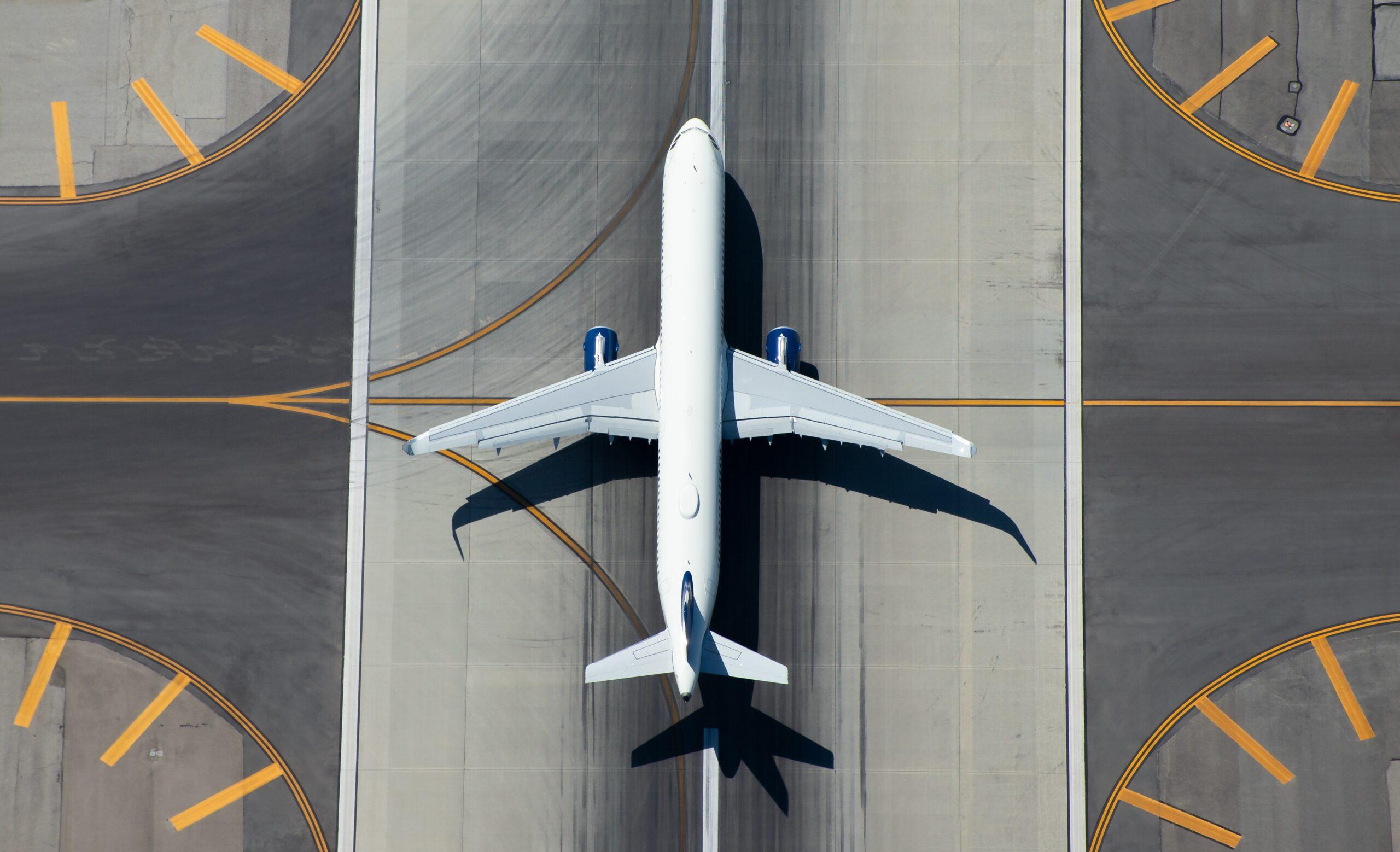
In managing airport traffic, small errors can cause catastrophe. Today at a NASA symposium in Los Angeles, a group from the CMU Robotics Institute’s AirLab reported using PSC’s Bridges-2 supercomputer to create World2Rules, an AI that draws from airport data and historical crash reports to help analyze and explain potential collision risks in airport operations.
WHY IT’S IMPORTANT
On March 12, 2026, an air traffic controller told an Air Canada jet that had just landed at JFK Airport in New York to wait before crossing a runway, to avoid an EVA Air jet that was landing. The Air Canada crew acknowledged the instructions.
But they began moving right away, while the EVA jet was still traveling toward them at a high speed. Fortunately, the alert controller transmitted, “Stop stop stop stop” in time. The Air Canada plane stopped, the EVA plane zoomed by it, and there was no collision.
But it had been close.
“The overall idea [is] we’ve been working on this project to see how we can improve safety in the aviation domain, or [other] safety-critical domains. The original idea stemmed from [the fact that], as you’ve seen on the news, runway incursions have been happening … Sometimes, they’re minor, but sometimes they can be quite catastrophic.”
— Jack Wang, CMU Robotics Institute
Jay Patrikar and Jack Wang, students working in Sebastian Scherer’s AirLab at CMU’s Robotics Institute, wanted to see if they could design an AI that could help not only detect airport collisions that were about to happen, but also predict possible future collisions. This could give pilots and controllers extra minutes or seconds to avoid disasters. To build, train, and test this method, they turned to PSC’s Bridges-2 system, via an allocation from ACCESS, the NSF’s network of supercomputers.
HOW PSC HELPED
Prior to World2Rules, the AirLab and BIG lab jointly developed Amelia-42. The Amelia dataset of raw airport surface movement pulls from two years of Federal Aviation Administration data at 42 U.S. airports. The team’s new goal would be for World2Rules to be a complementary component within the collaborators’ broader collision prediction pipeline. World2Rules would learn safety rules from the Amelia data and use them to interpret trajectory forecasts. This would help explain its behavior in a way that humans could understand, and identify potential rule violations.
The task would be challenging. To create World2Rules, the CMU scientists looked at two different kinds of AI. Neural models, patterned on a simplified idea of how the human brain works, are good at pulling the gist out of complex data. But their results are a black box. We can’t “look under the hood” for the formal guarantees about how they work that we’d like for life-critical functions.
Symbolic methods, on the other hand, are based on symbols that humans can read and understand. But they struggle with imperfect data. Airport records tend to have vast amounts of routine data and only a small amount of data from rare bad incidents. Since symbolic methods have a hard time with this kind of large and noisy data set, Patrikar and Wang decided to pursue a neuro-symbolic AI that combined the strengths of the two methods. Bridges-2 was ideal for their work. For one thing, PSC’s management of the system for users made it possible for them to focus on solving their problem rather than running the computer. Equally important, Bridges-2 handles vast data well. Amelia-42 contains close to 10 terabytes of raw data — ten times as much as the entire drive of a good laptop. Their AI would need to draw from that deep well.
“We basically collect all aircraft surface movement data from airports in the U.S. … And that stream is pretty intense. It’s, like, 1 megabit per second every day, 24-7, 365 … So it’s a ridiculously high amount of data … We used PSC to train large trajectory forecasting models, [which] was first of its kind … We don’t want to understand [that] a crash is happening. We want to predict if a crash will happen in the future.”
— Jay Patrikar, CMU Robotics Institute
The team’s approach, called World2Rules, used the airport data to extract a framework that generates rules that are consistent and understandable to humans. Their method uses both nominal data and off-nominal crash reports to generate interpretable rules grounded in historical data.
The team had an AI partnership going: Amelia-TF generated trajectory forecasts, and World2Rules learned interpretable safety rules that it used to analyze, verify, and provide explanations for potential collision scenarios within those forecasts. World2Rules was able to recognize unreliable evidence and identify and delete the kinds of faulty outputs that plague less sophisticated systems. In a direct comparison of learning accurate safety rules, it achieved 23.6% improvement over a purely neural AI and 43.2% improvement over a naive symbolic approach.
The team reported their results today at the NASA Formal Methods Symposium in Los Angeles. You can find the pre-symposium preprint of the article here.
World2Rules can work even better with more data. The current AI also works from essentially a snapshot of vehicles and their movements at a moment in time. One direction the team would like to move is to incorporate a time-evolving picture that better deals with uncertainties in what the vehicles will do. Finally, while World2Rules was instantiated for aviation surface safety analysis, the AI can work from any similar data. It should be useful for learning rule-governing structures in other safety-critical domains.